
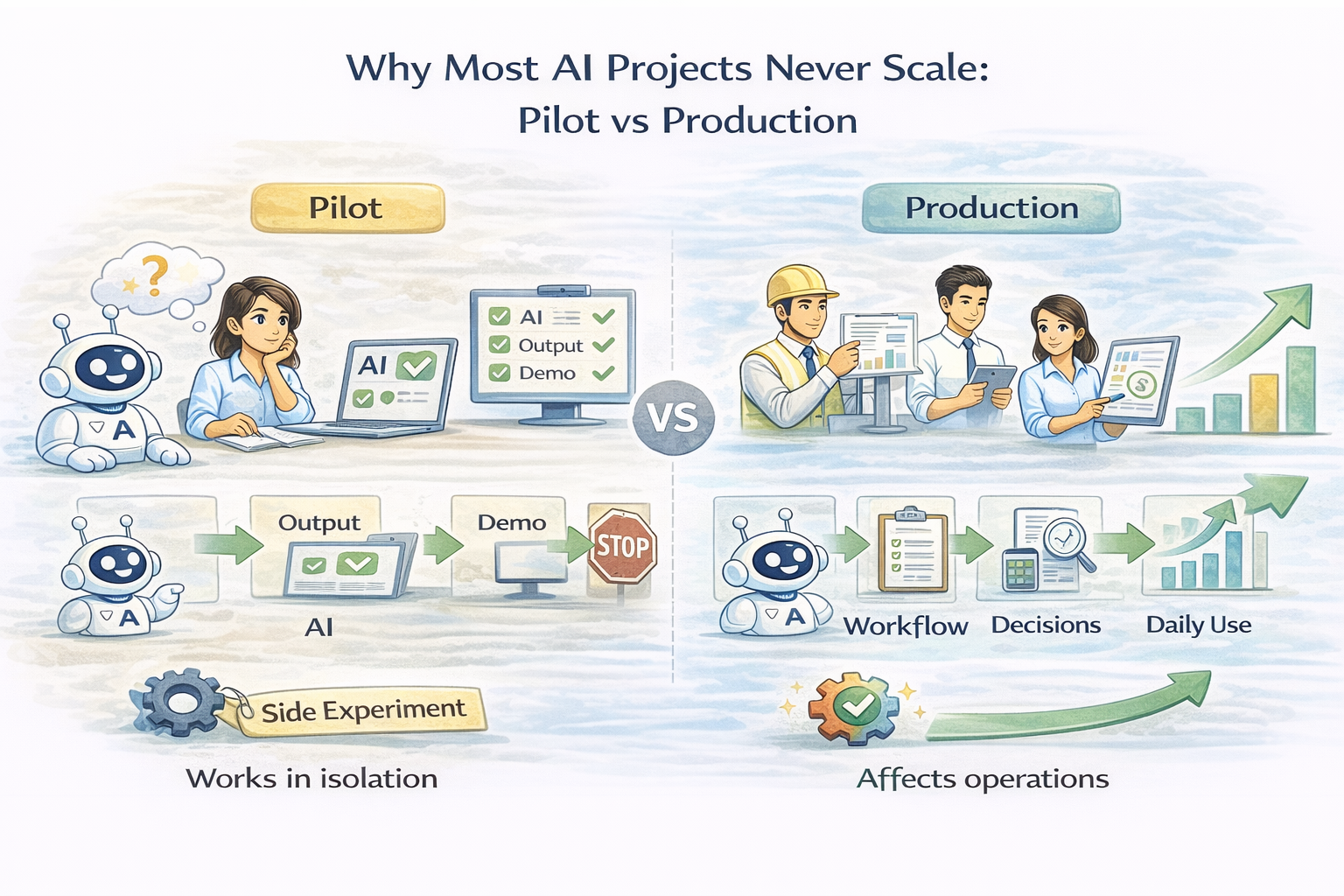
Why Most AI Projects Never Scale (From Pilot to Reality)
Pilot:
AI → Output → Demo → Stop
vs
Production:
AI → Workflow → Decisions → Daily Use → Scale
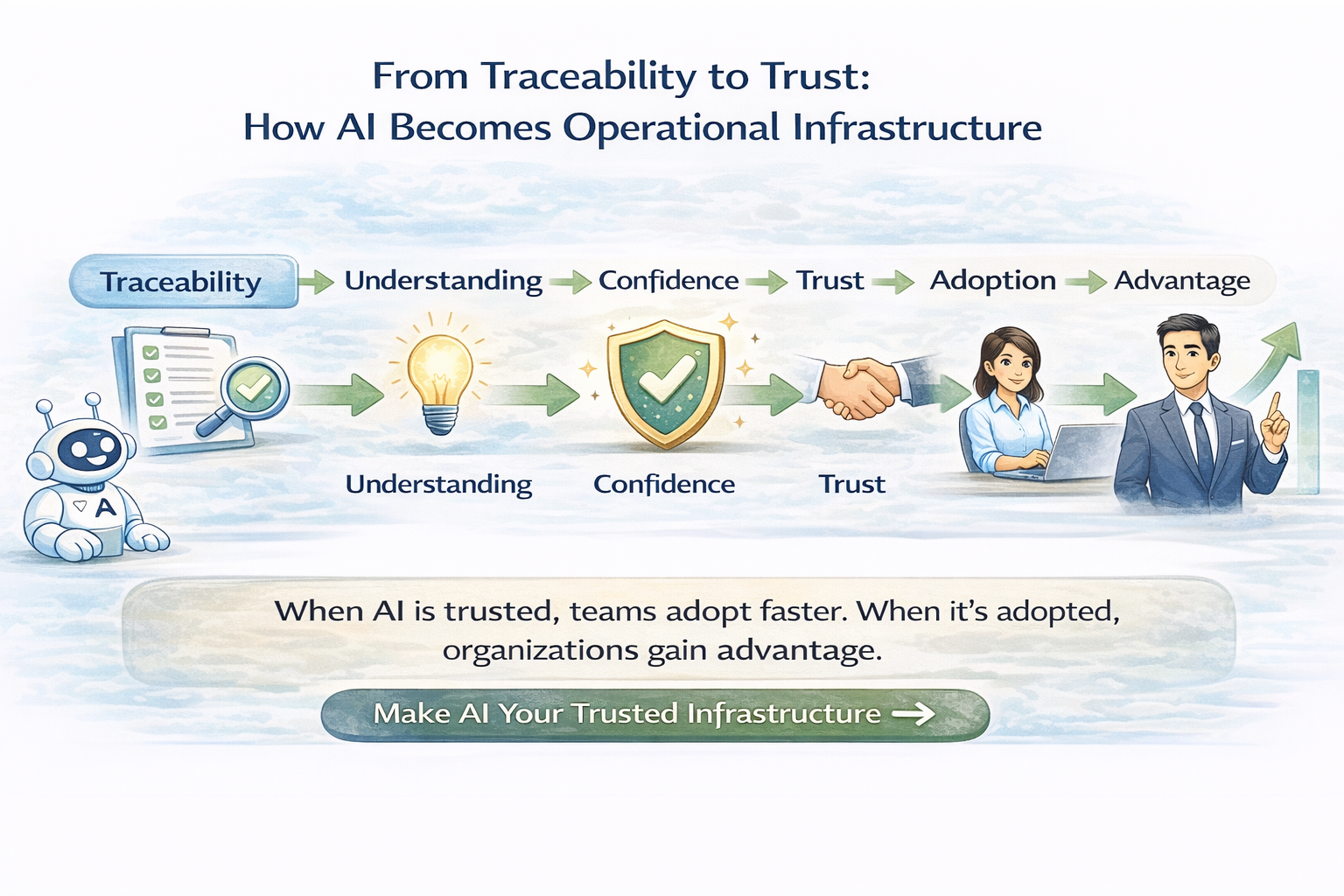
From Traceability to Trust (How AI Becomes Operational Infrastructure)
Traceability → Understanding → Confidence → Trust → Adoption → Advantage
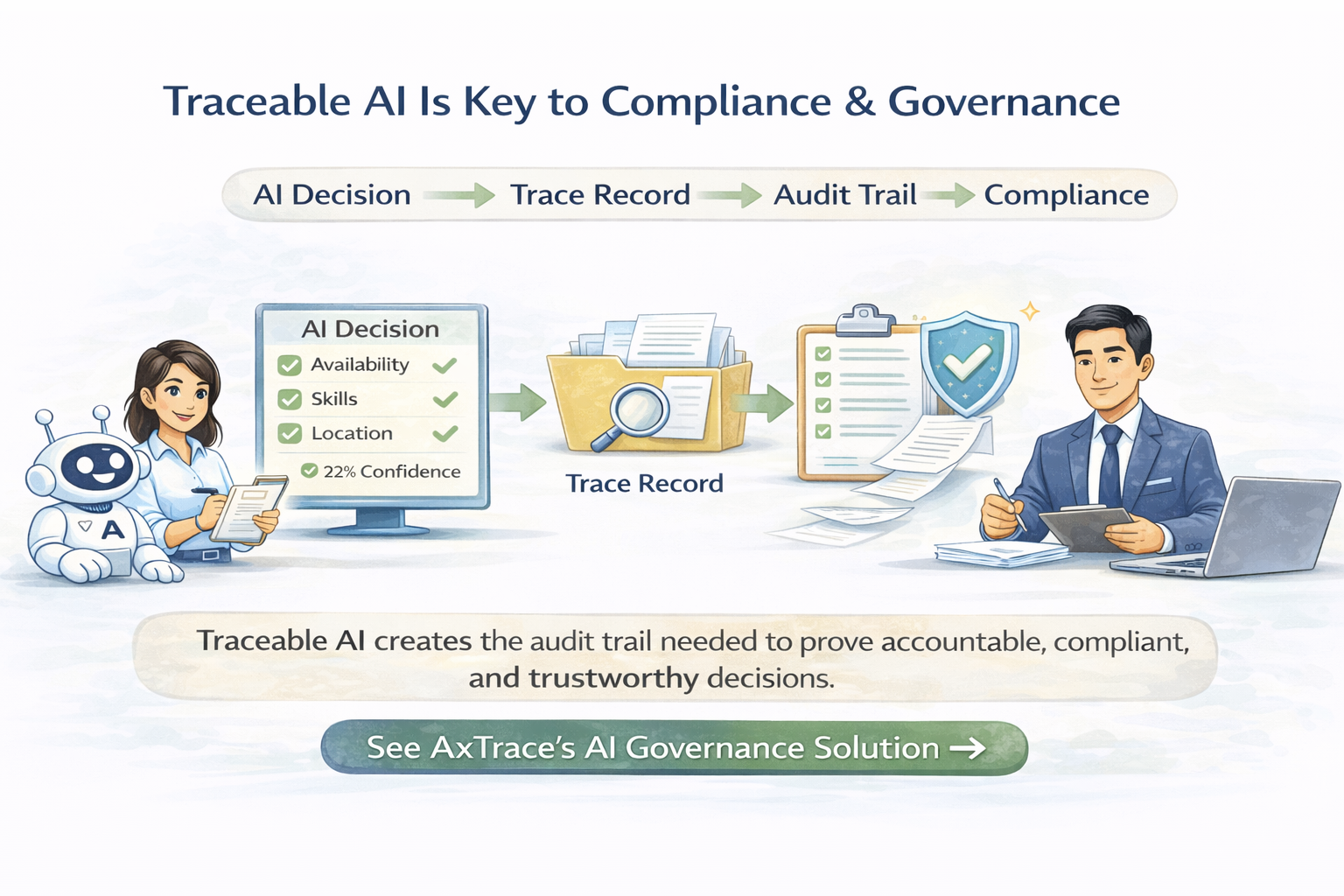
Traceability + Compliance (Why It Matters for Governance)
AI Decision → Trace Record → Audit Trail → Compliance → Trust
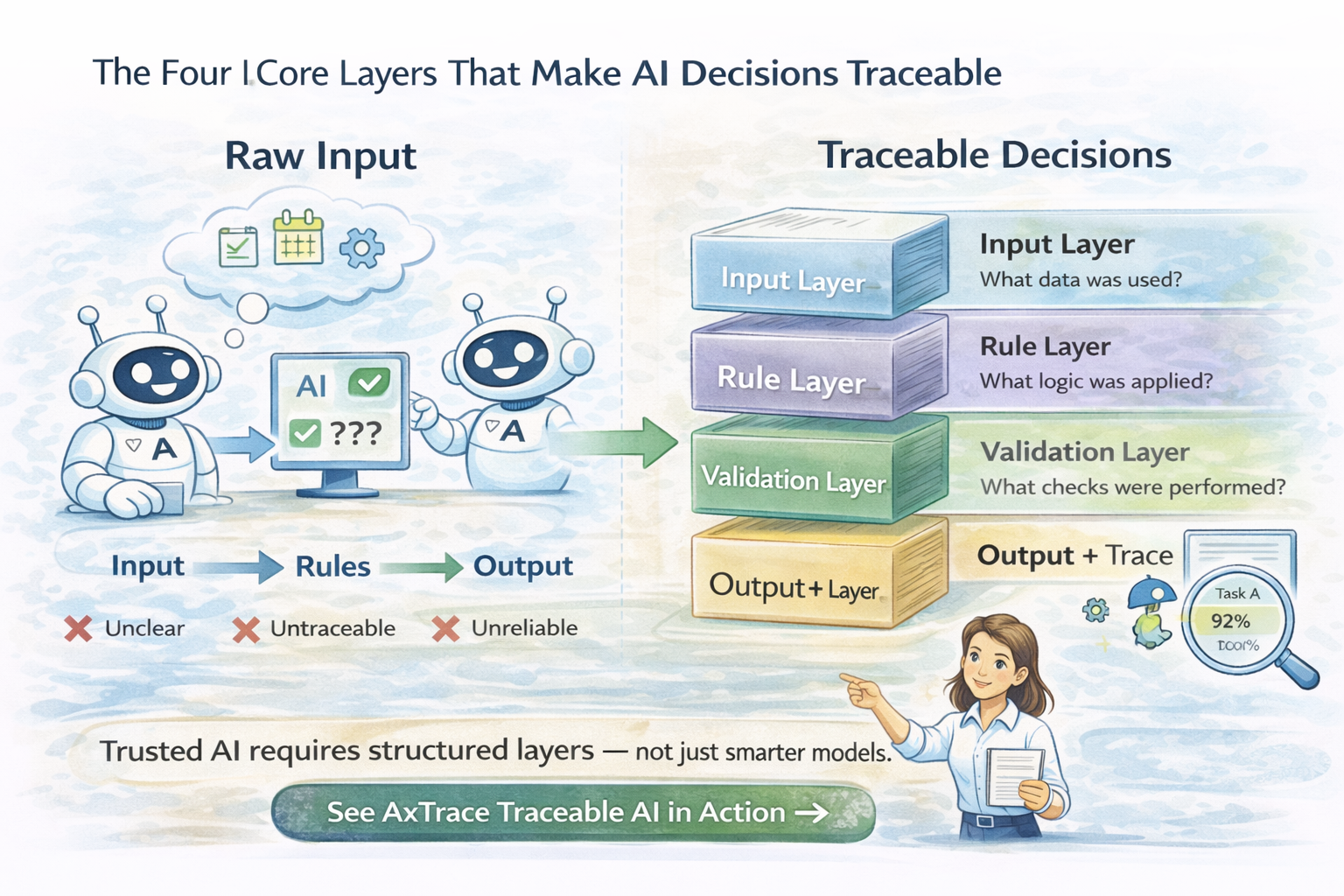
What Makes AI Decisions Traceable (The Core Layers)
Raw Input → AI → Output → ???
vs
Input → Rules → Validation → Output + Why → Trace
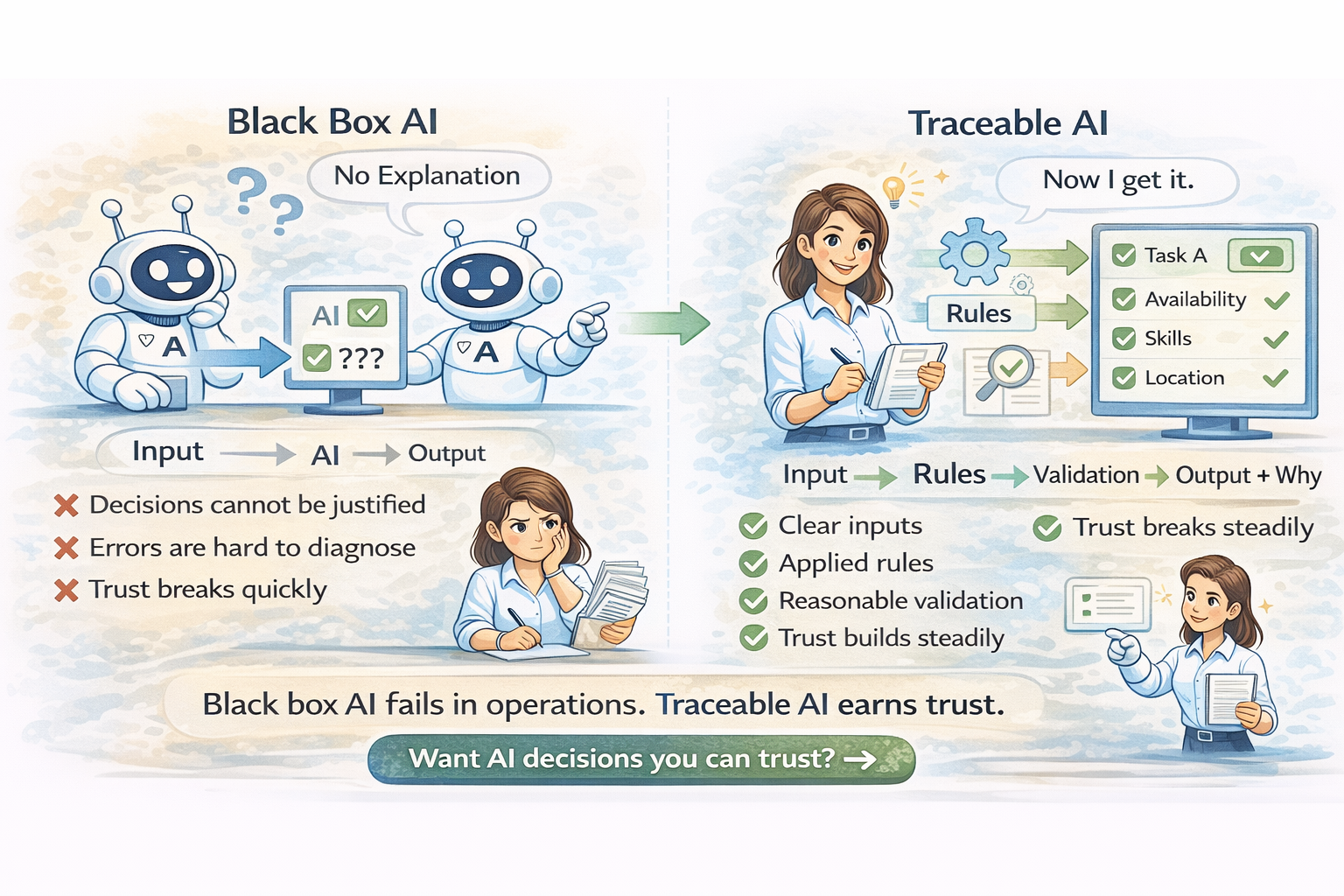
Why Black Box AI Fails in Operations
Black Box:
AI → Output → No Explanation → Doubt → Manual Override
Traceable AI:
AI → Rules → Validation → Output + Why → Trust → Action
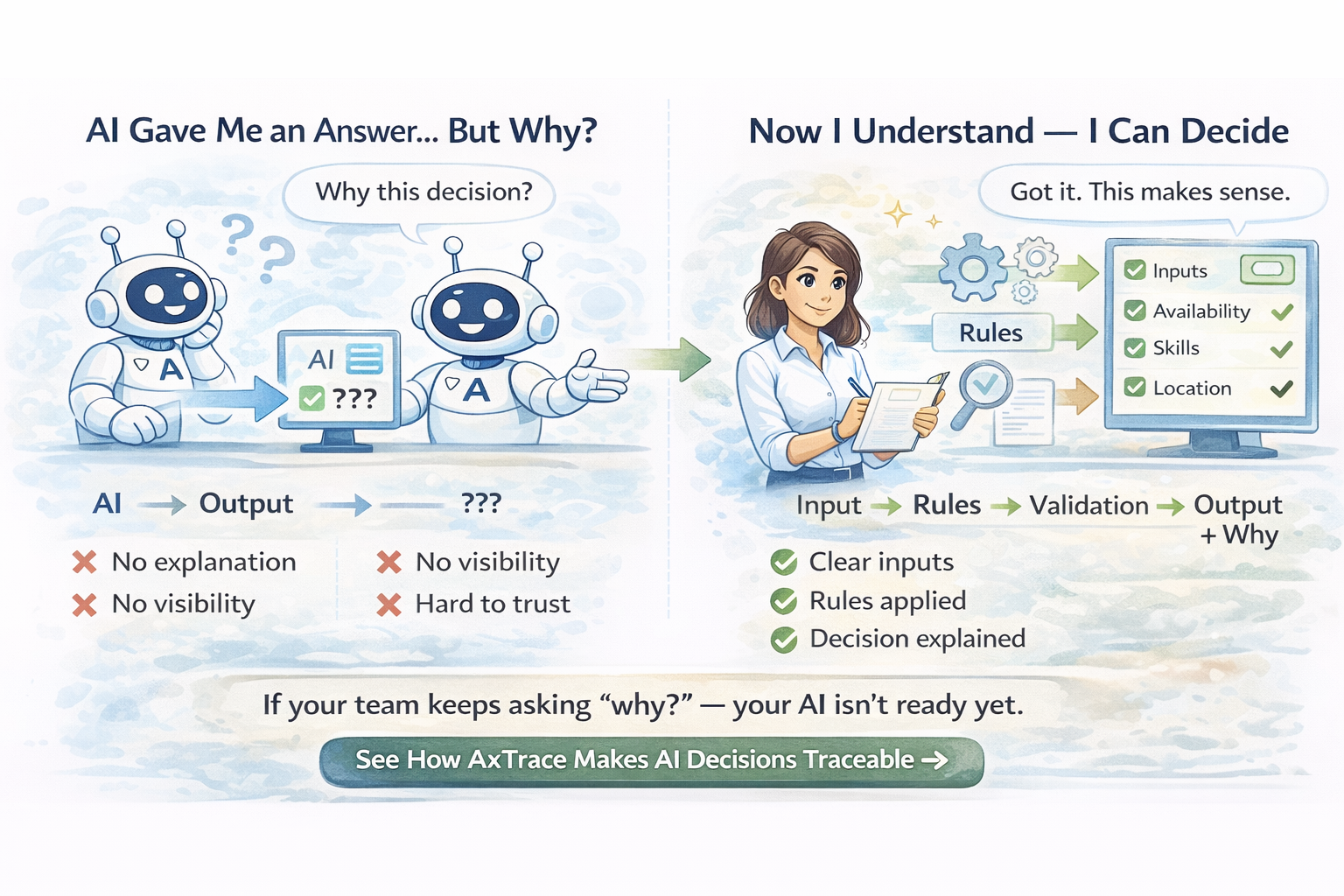
What Is AI Traceability (And Why It Matters)
AI → Output → ???
vs
AI → Trace → Explanation → Trust
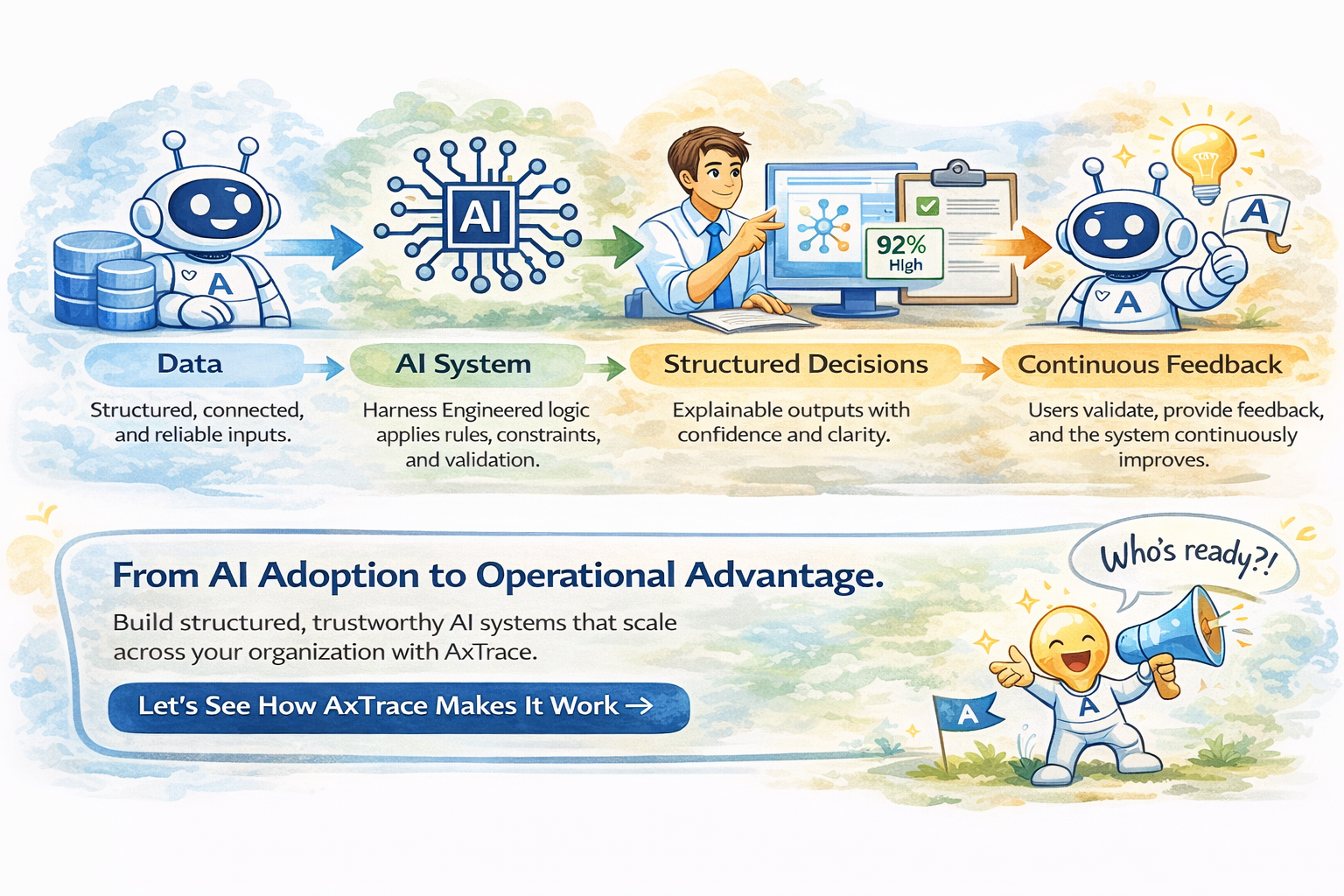
Building an AI-Ready Organization (From Adoption to Advantage)
Data → AI System → Structured Decisions → Human Validation → Feedback Loop
Result:
Continuous Improvement → Operational Advantage
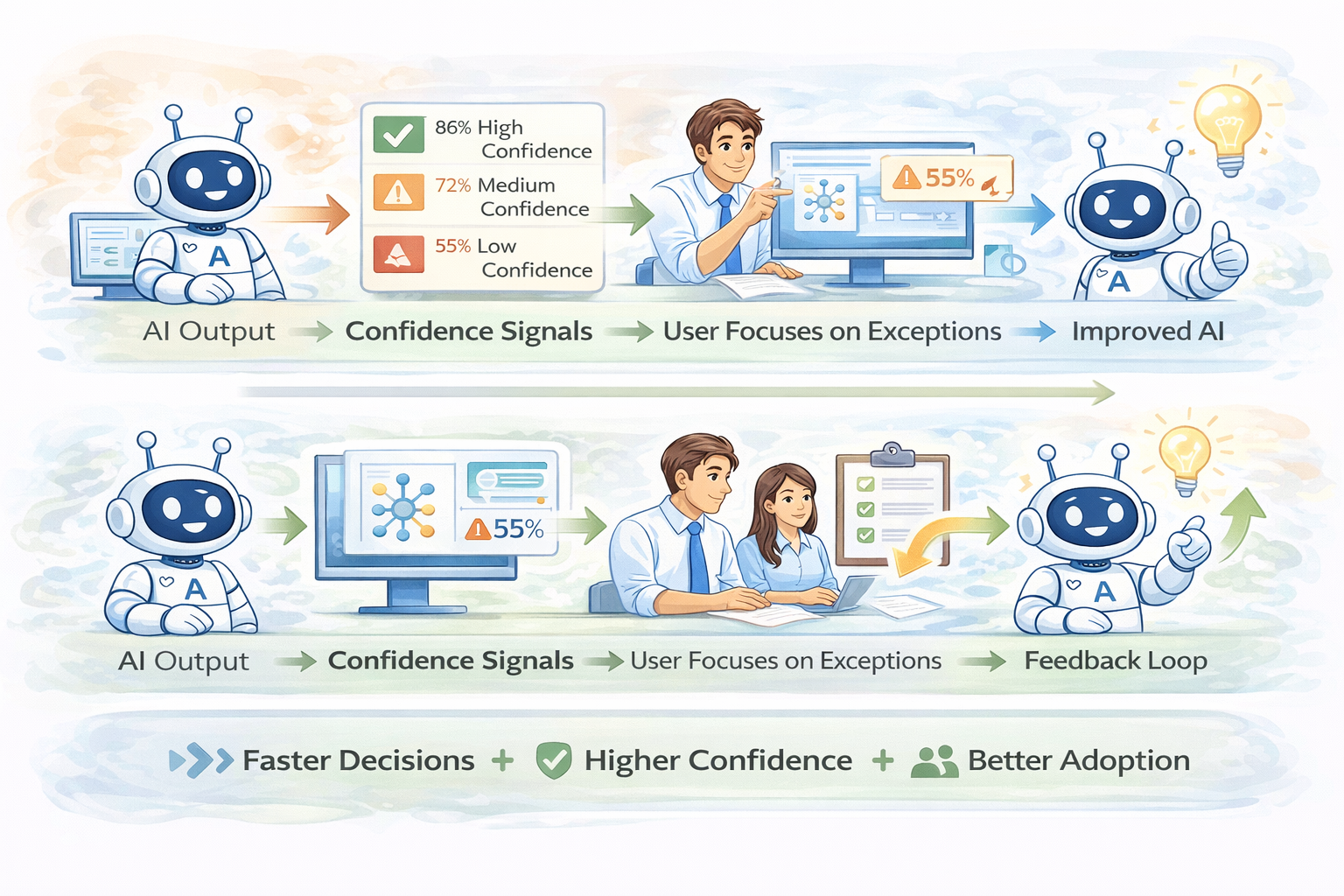
Training Teams to Work With AI (From Resistance to Confidence)
AI Output → Confidence Signals → User Focuses on Exceptions → Feedback Loop → Improved AI
Result:
Faster Decisions + Higher Confidence + Better Adoption
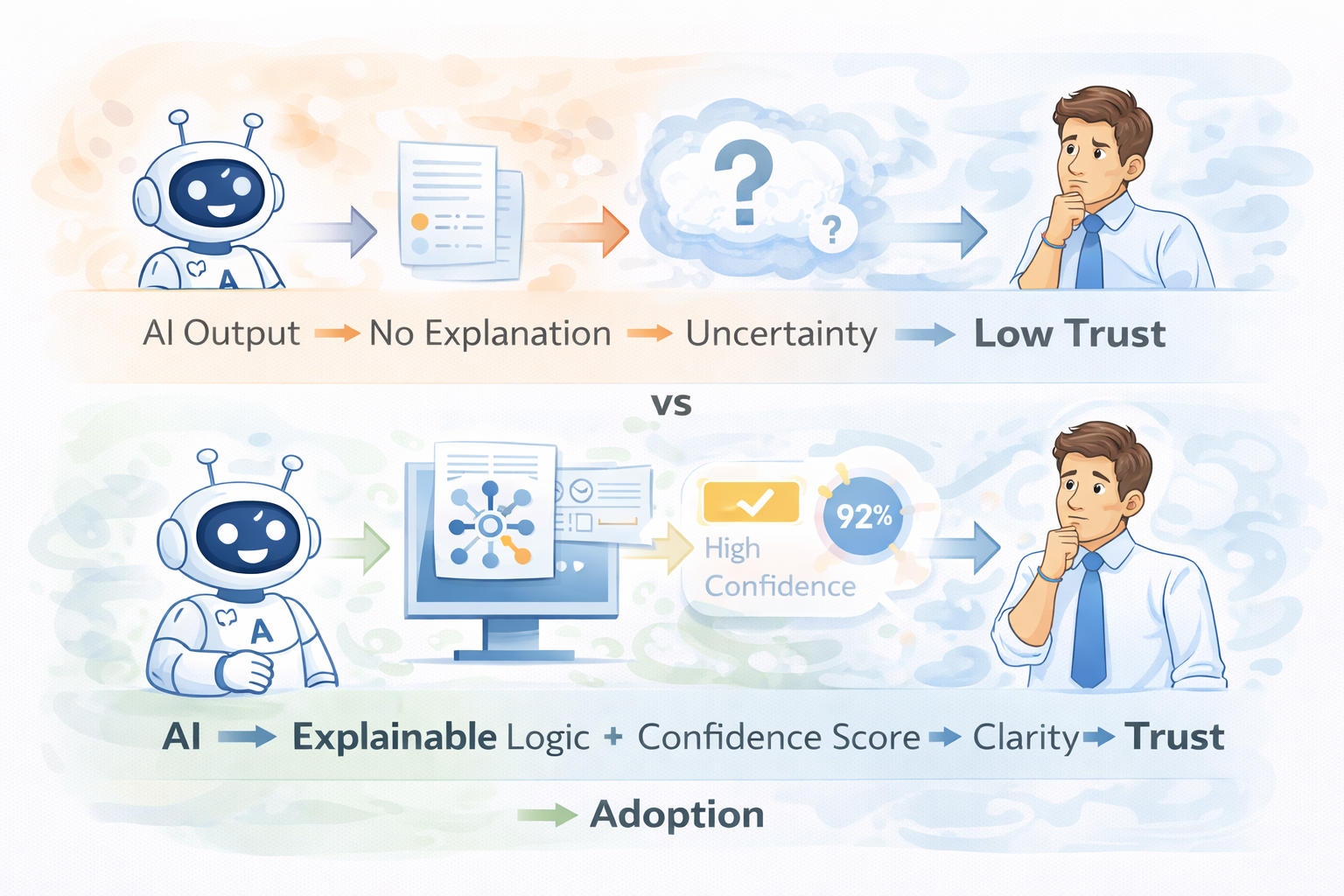
Designing AI for Trust (Confidence, Explainability)
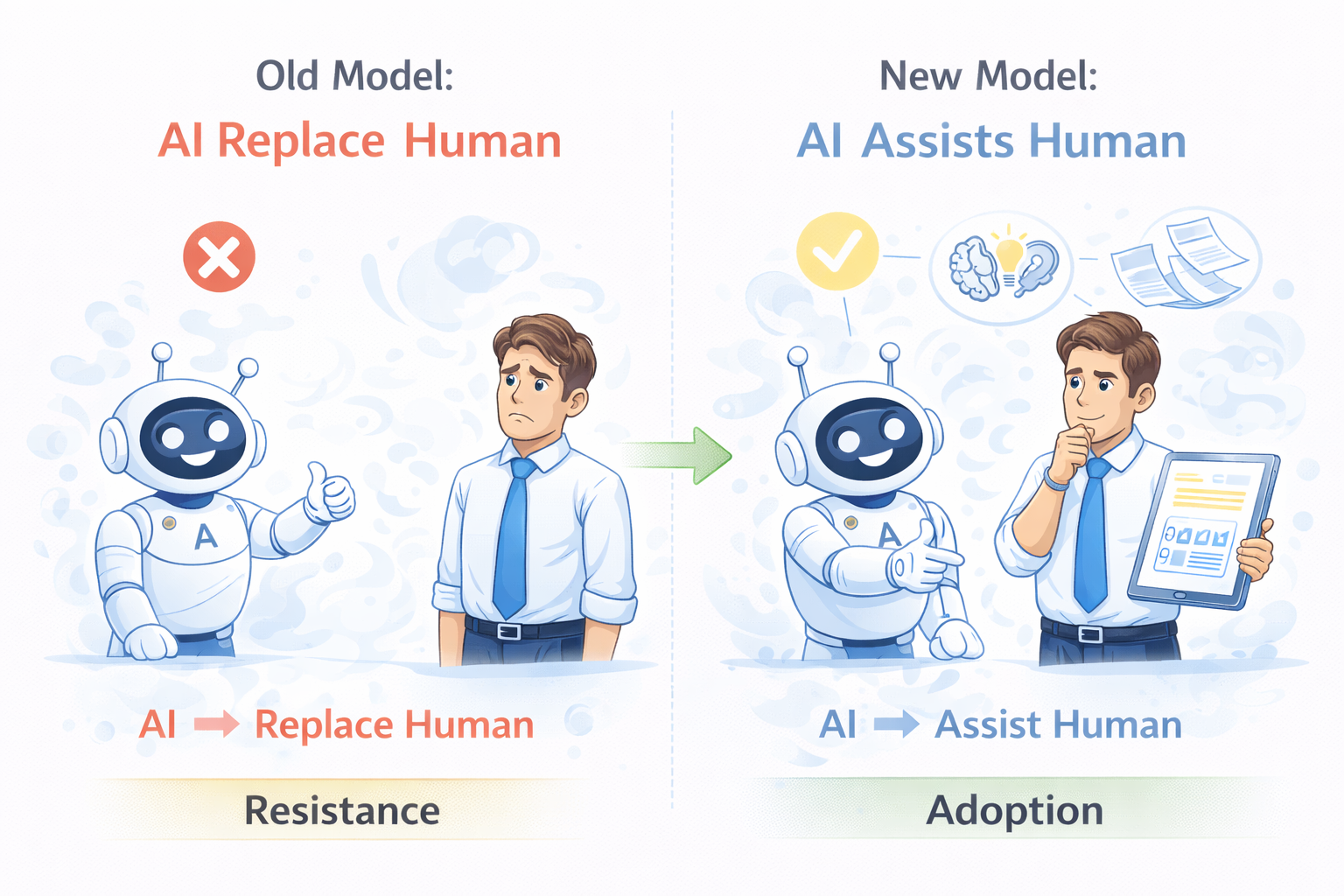
AI Should Assist, Not Replace (The Mindset Shift That Drives Adoption)
AI adoption succeeds when systems assist humans instead of replacing them — building trust, improving decisions, and enabling scale.
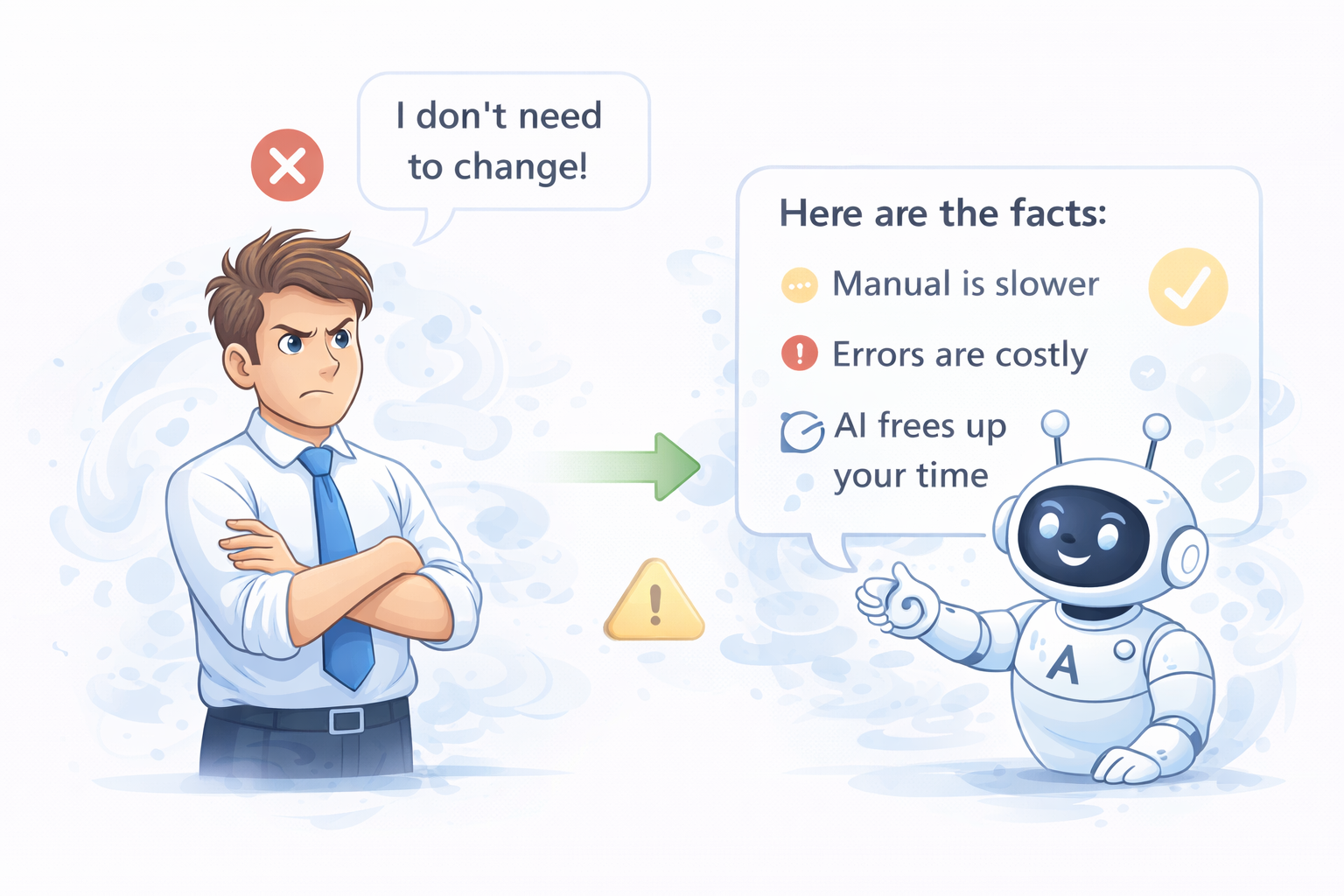
Why People Resist AI (Even When It Works)
AI adoption doesn’t fail because of technology — it fails due to lack of trust, control, and understanding in how decisions are made.
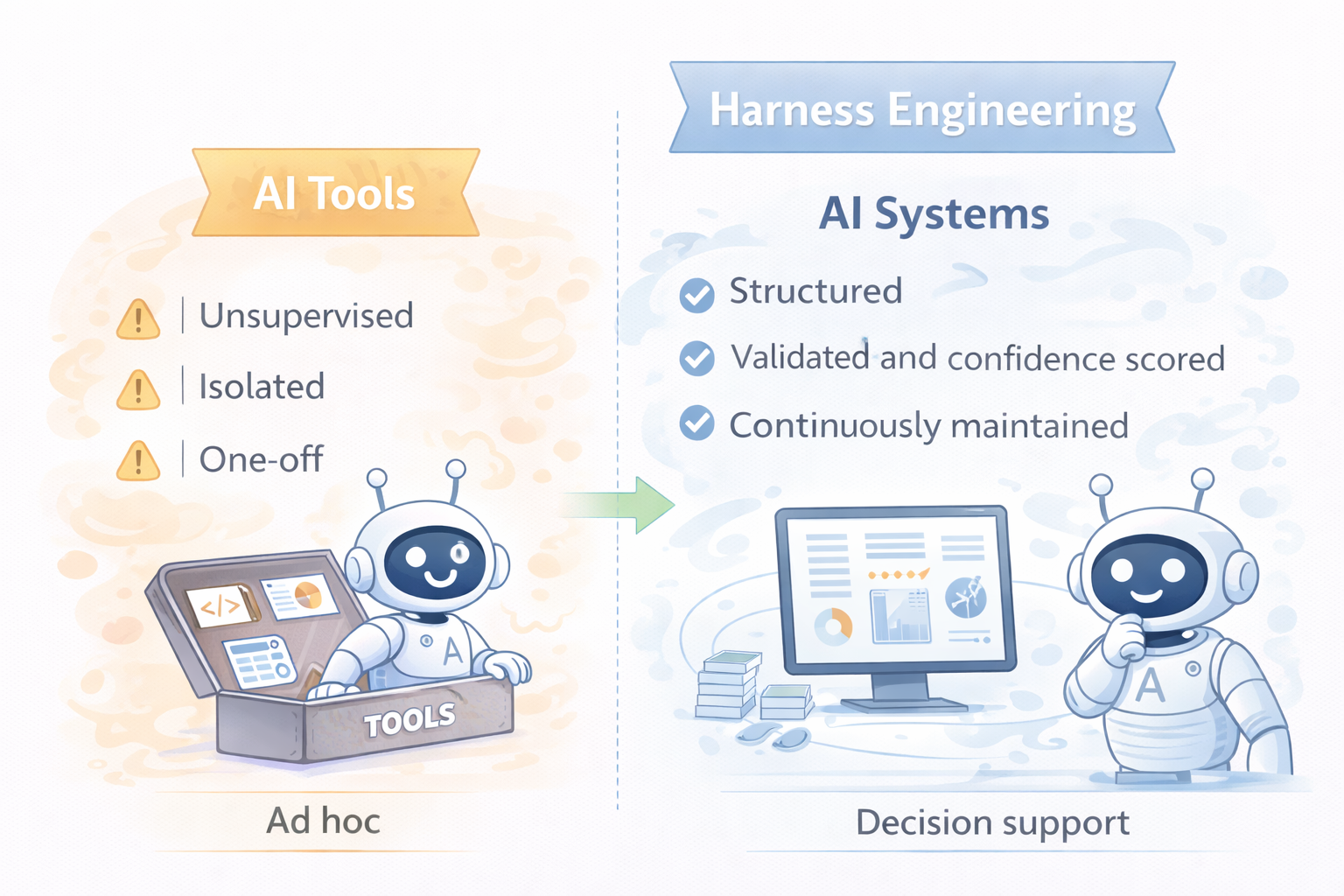
From AI Tools to AI Systems (Why Harness Engineering Is the Future)
AI is evolving from tools to systems — Harness Engineering enables structured, scalable, and reliable AI in real-world operations.
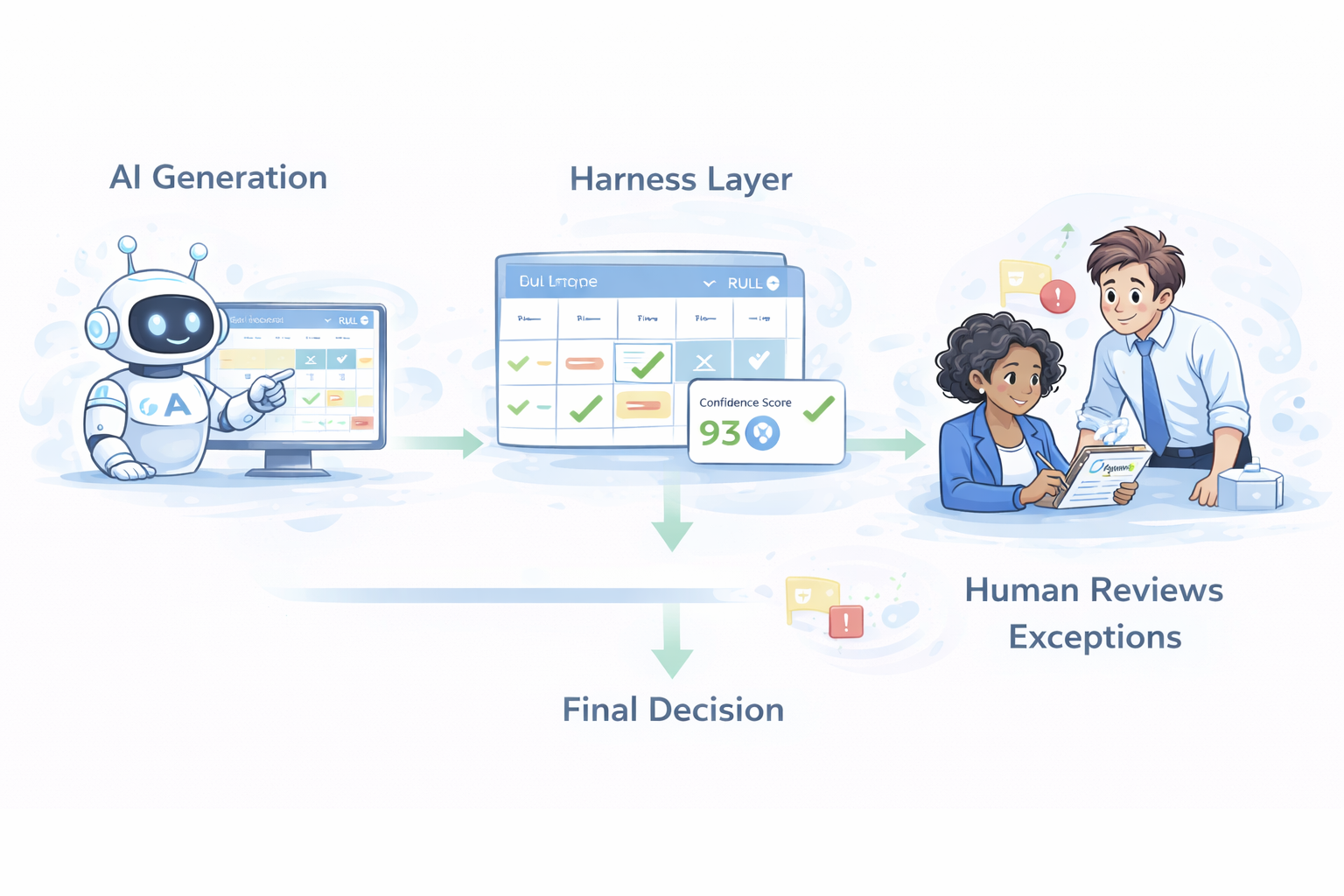
Harness Engineering + Human-in-the-Loop (Where AI Actually Works)
The best AI systems combine automation with human validation — Harness Engineering ensures humans focus only where it matters most.
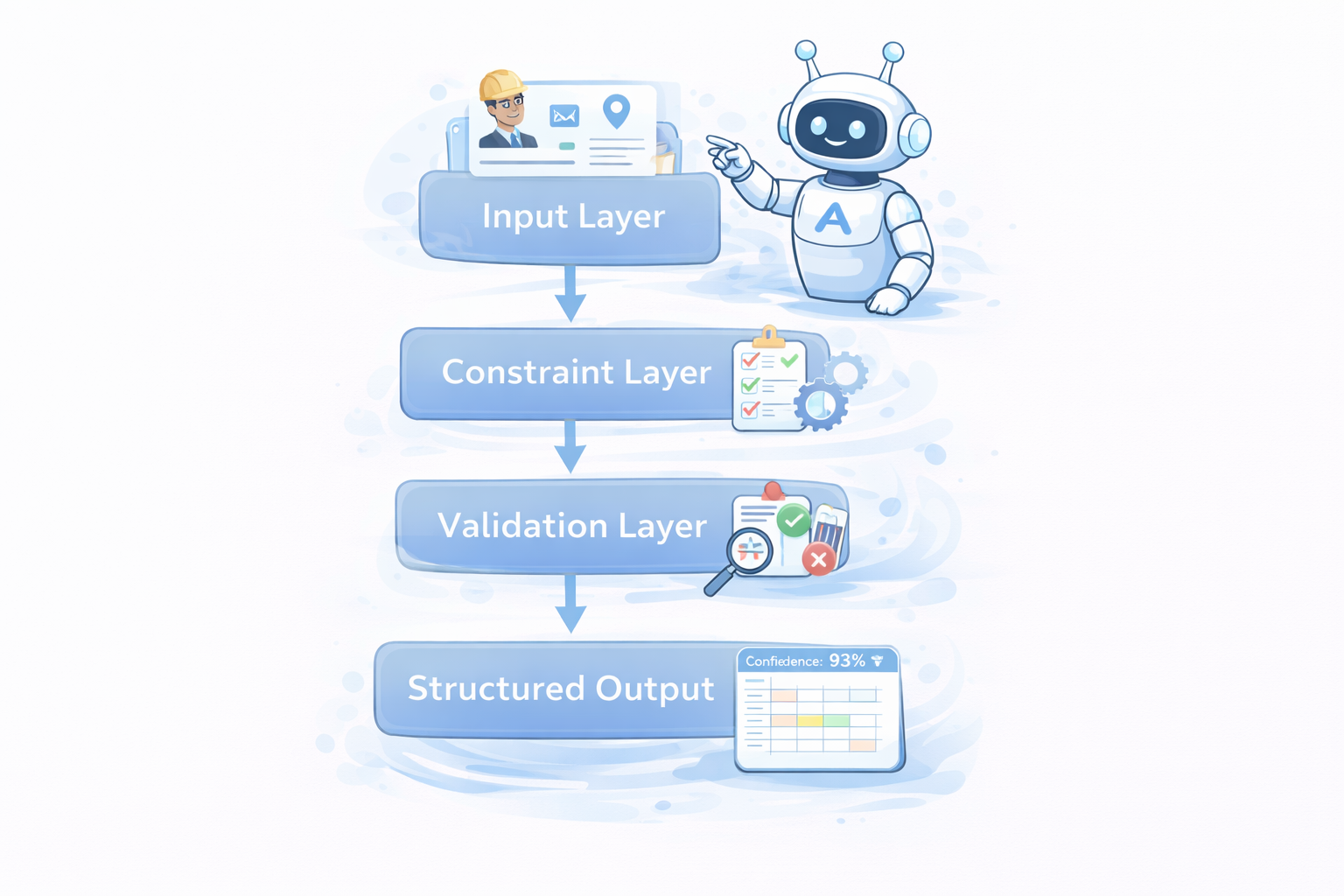
The Core Components of Harness Engineering (How AI Becomes Reliable)
Harness Engineering combines input structuring, constraints, validation, and output control to make AI reliable in real-world operations.
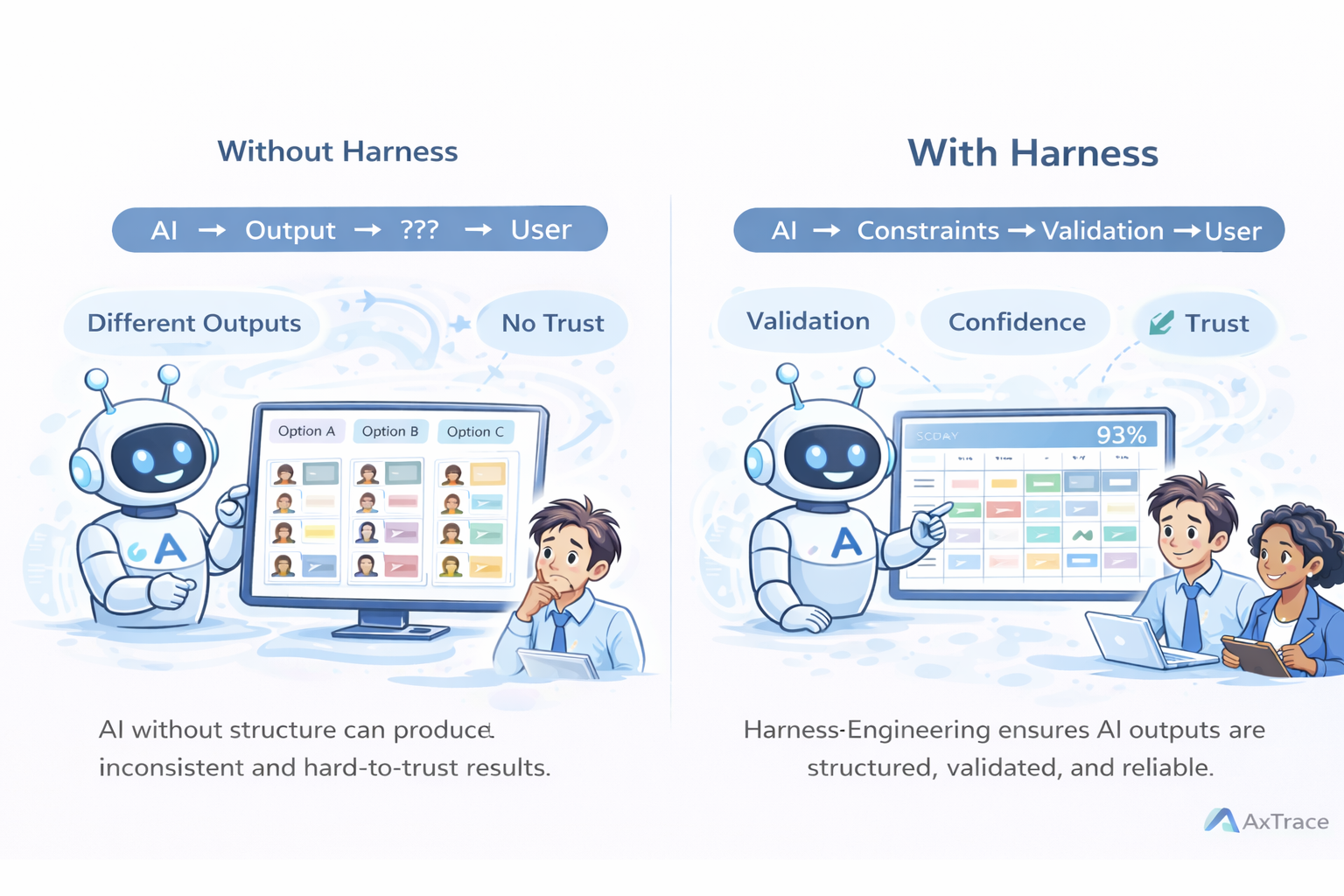
Why Most AI Projects Fail Without a Harness
Without Harness:
AI → Output → ??? → User
With Harness:
AI → Constraints → Validation → Reliable Output
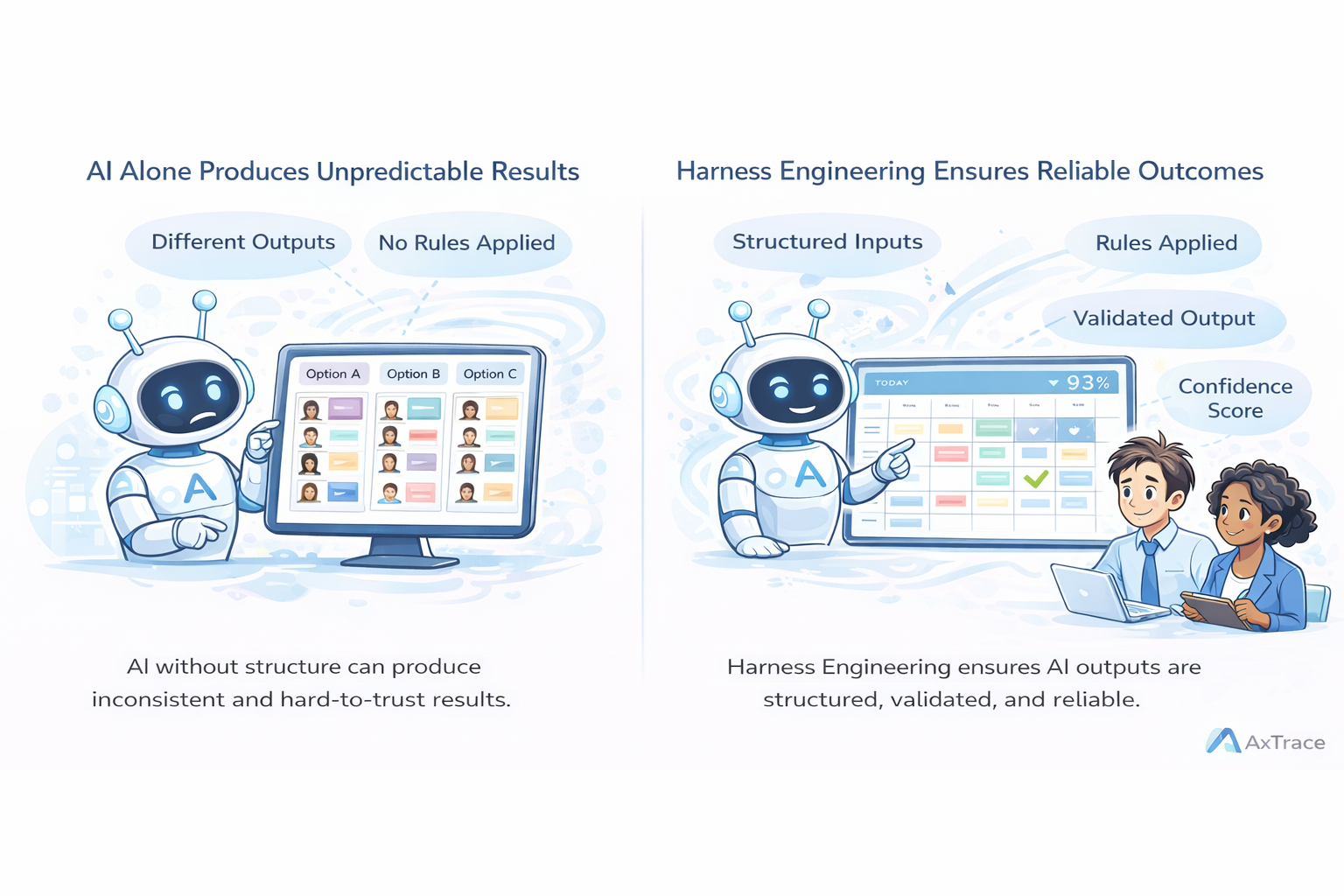
What Is Harness Engineering in AI (And Why It Matters for Real Operations)
Harness Engineering ensures those answers can be trusted, scaled, and used in real operations.
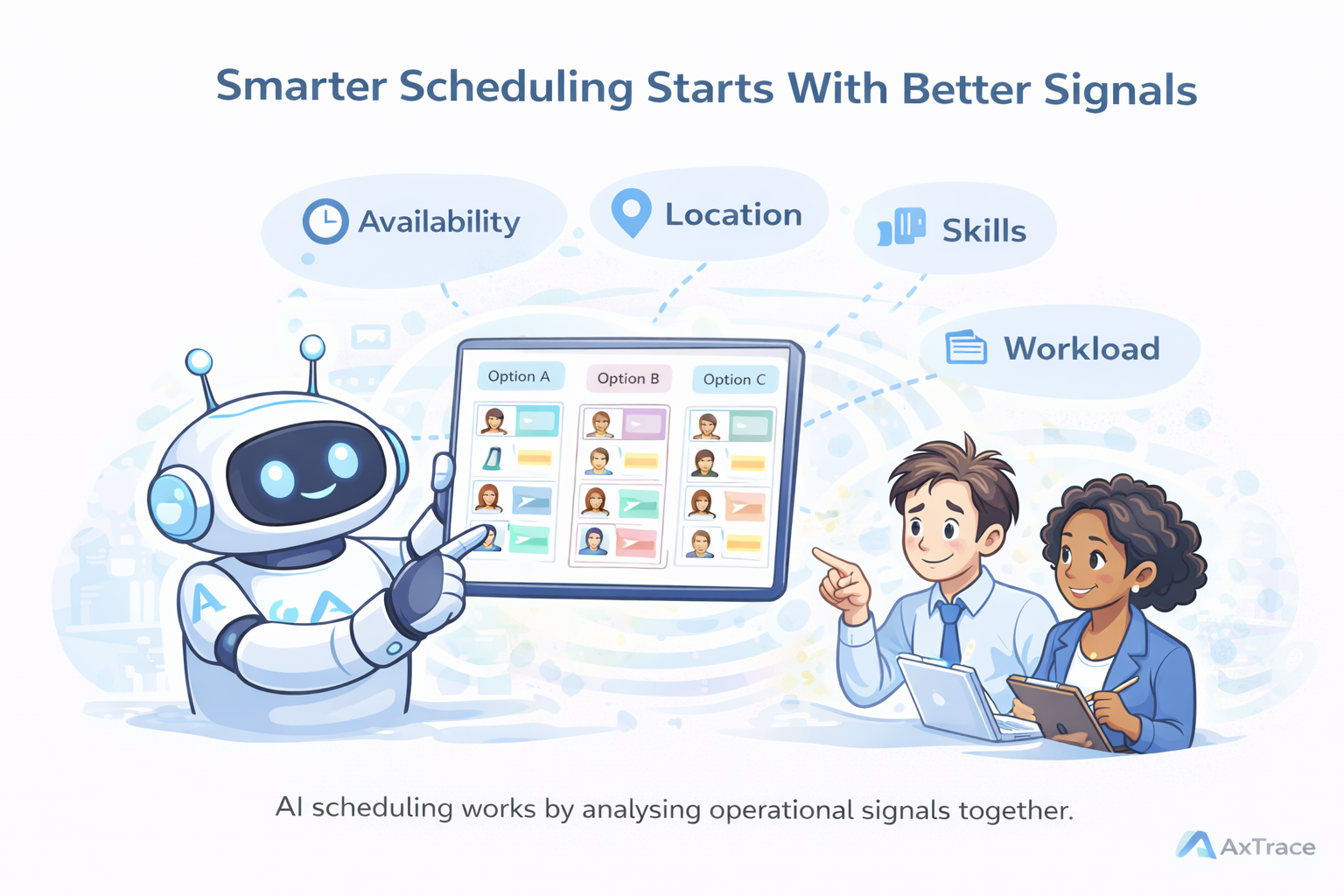
What AI Scheduling Actually Looks Like for SMEs
AI scheduling helps managers analyse availability, skills, workload, and distance simultaneously. Instead of replacing human planners, AI generates scheduling options so managers can review and approve decisions faster.
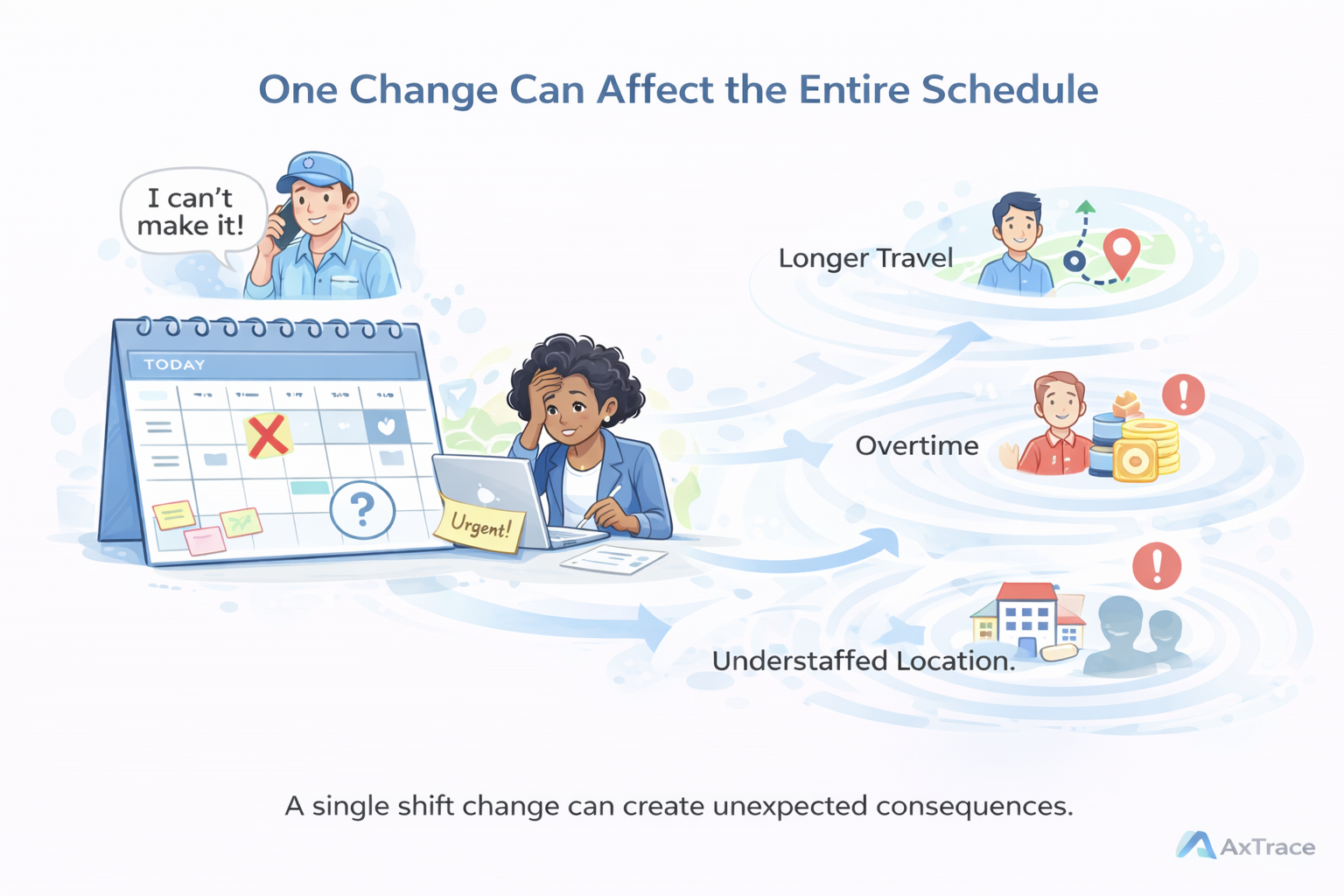
The Hidden Cost of Last-Minute Scheduling Changes
Last-minute scheduling changes may seem small, but they often trigger ripple effects across staffing, workload, and payroll. Learn why visibility and AI-assisted planning help managers evaluate these changes more effectively.
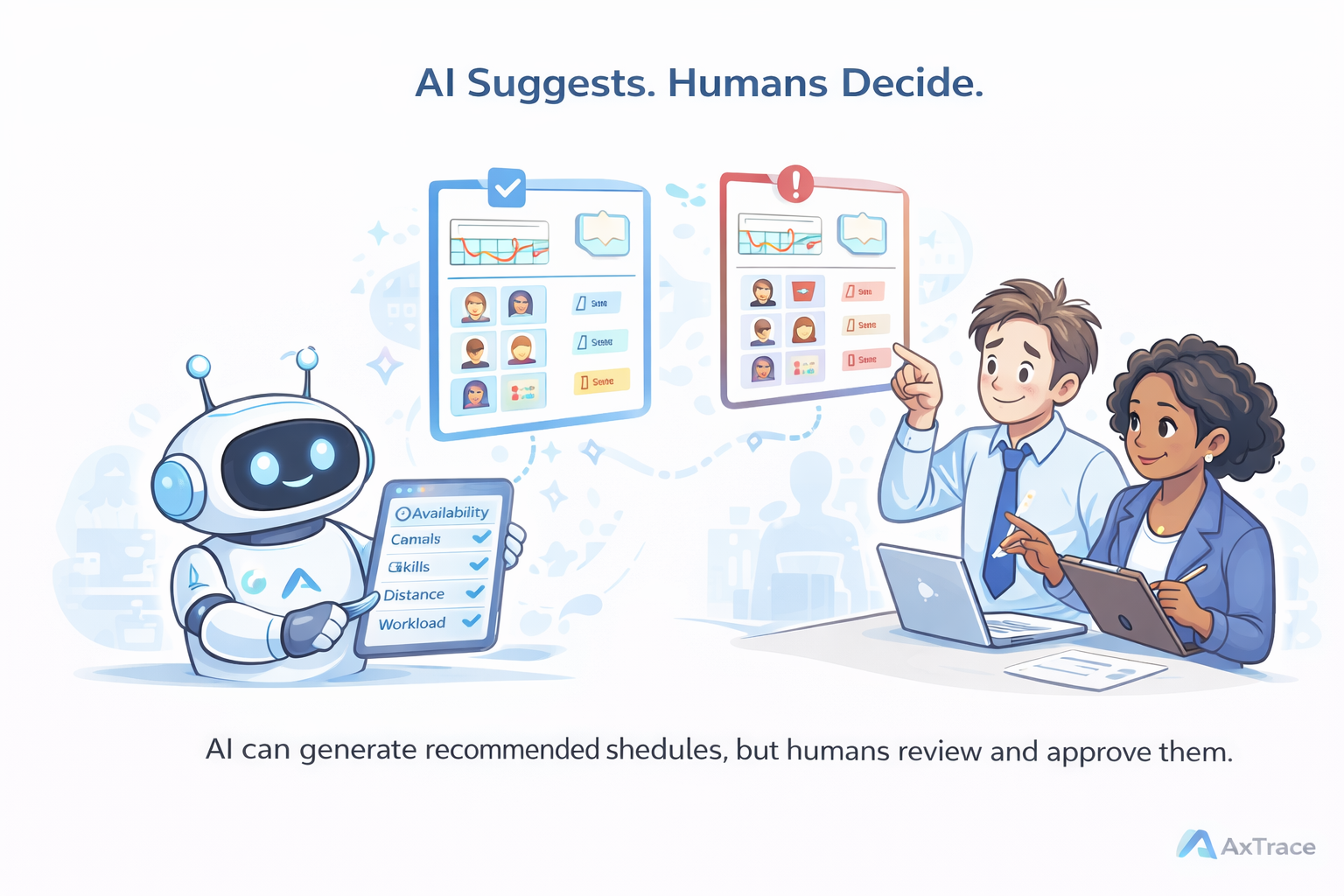
AI Scheduling Is Not About Replacing Humans
AI scheduling does not replace managers. Instead, it works as a decision assistant — analysing availability, skills, and workload to recommend schedules while humans remain in control.
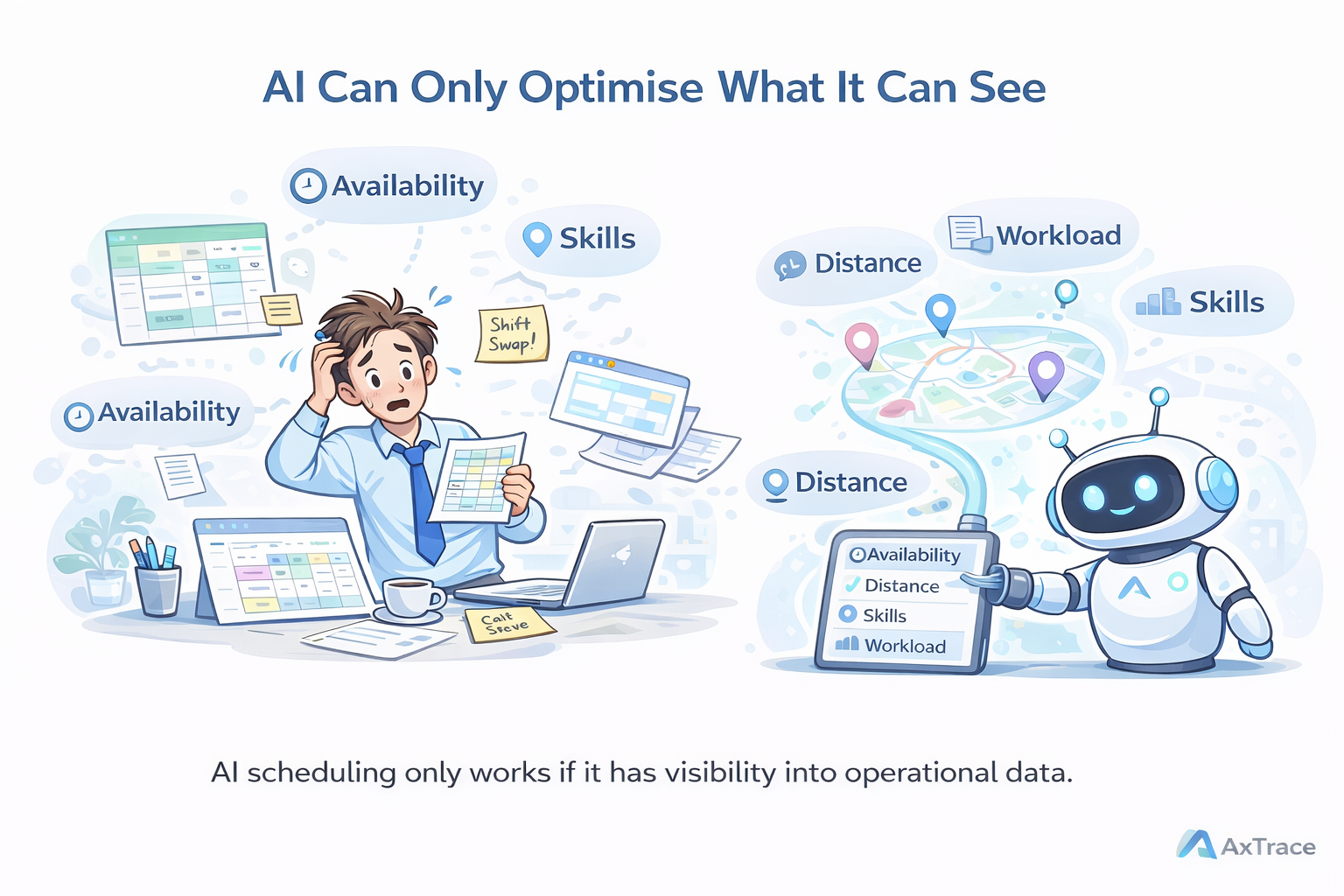
Why Visibility Must Come Before AI Scheduling
AI scheduling only works when operational signals are visible. Learn why availability, skills, and workload must be understood first before AI recommendations can improve scheduling decisions.