
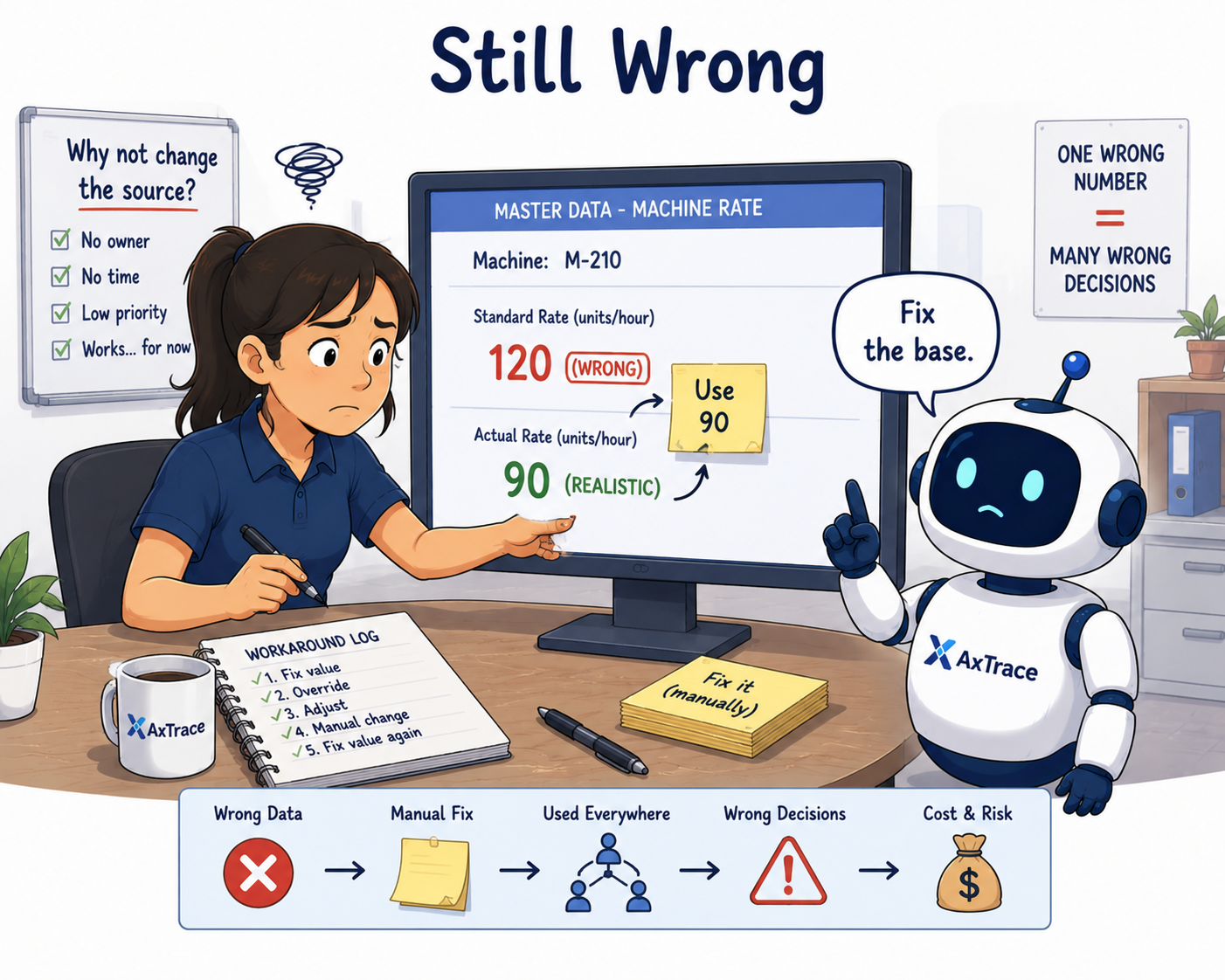
Nobody Changed the Master Data
Everyone knows the system value is wrong, so everyone corrects it manually. That works — until something stops knowing the workaround.
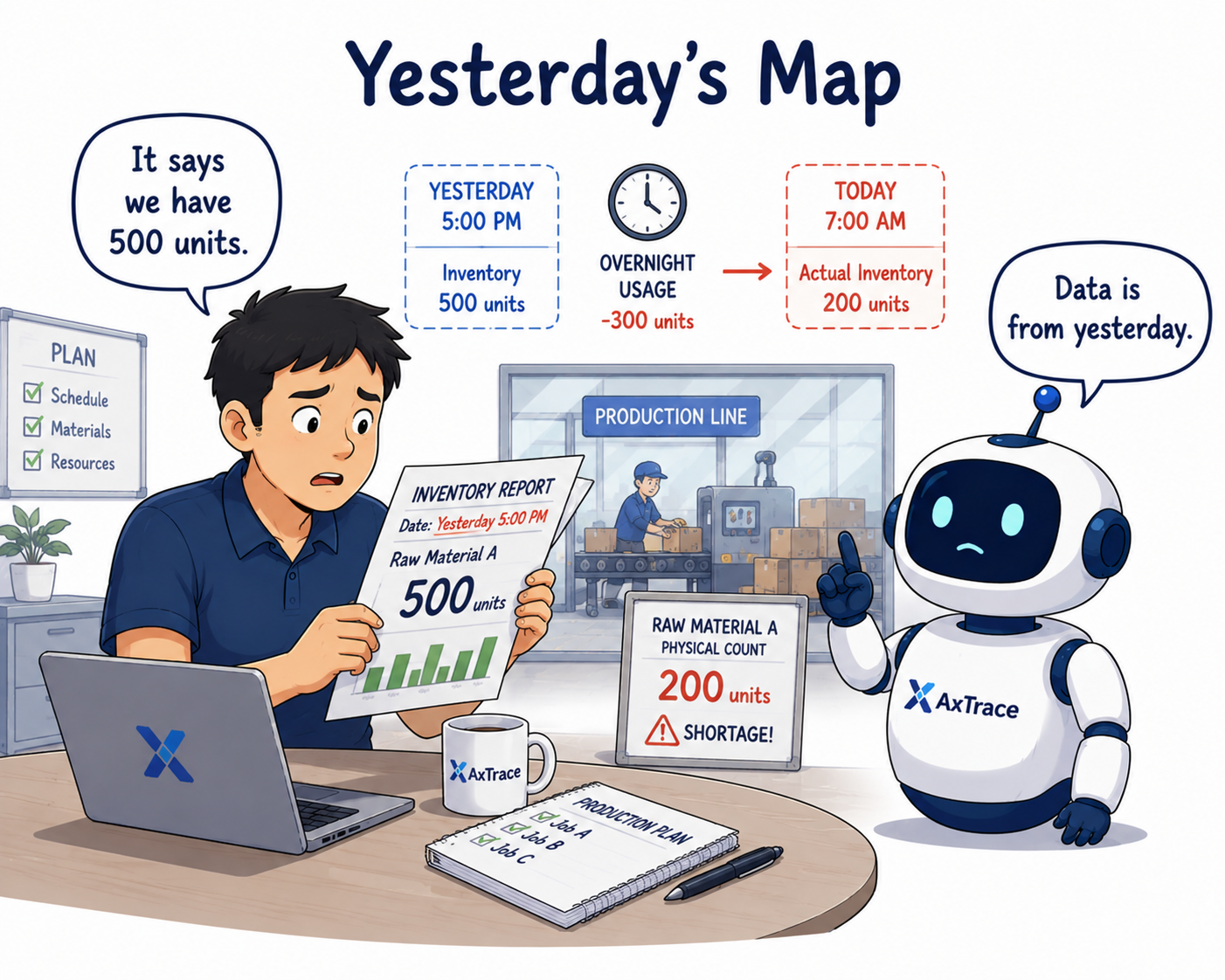
Yesterday's Data, Today's Decision
The number wasn't wrong. It was yesterday's number being used for today's decision.
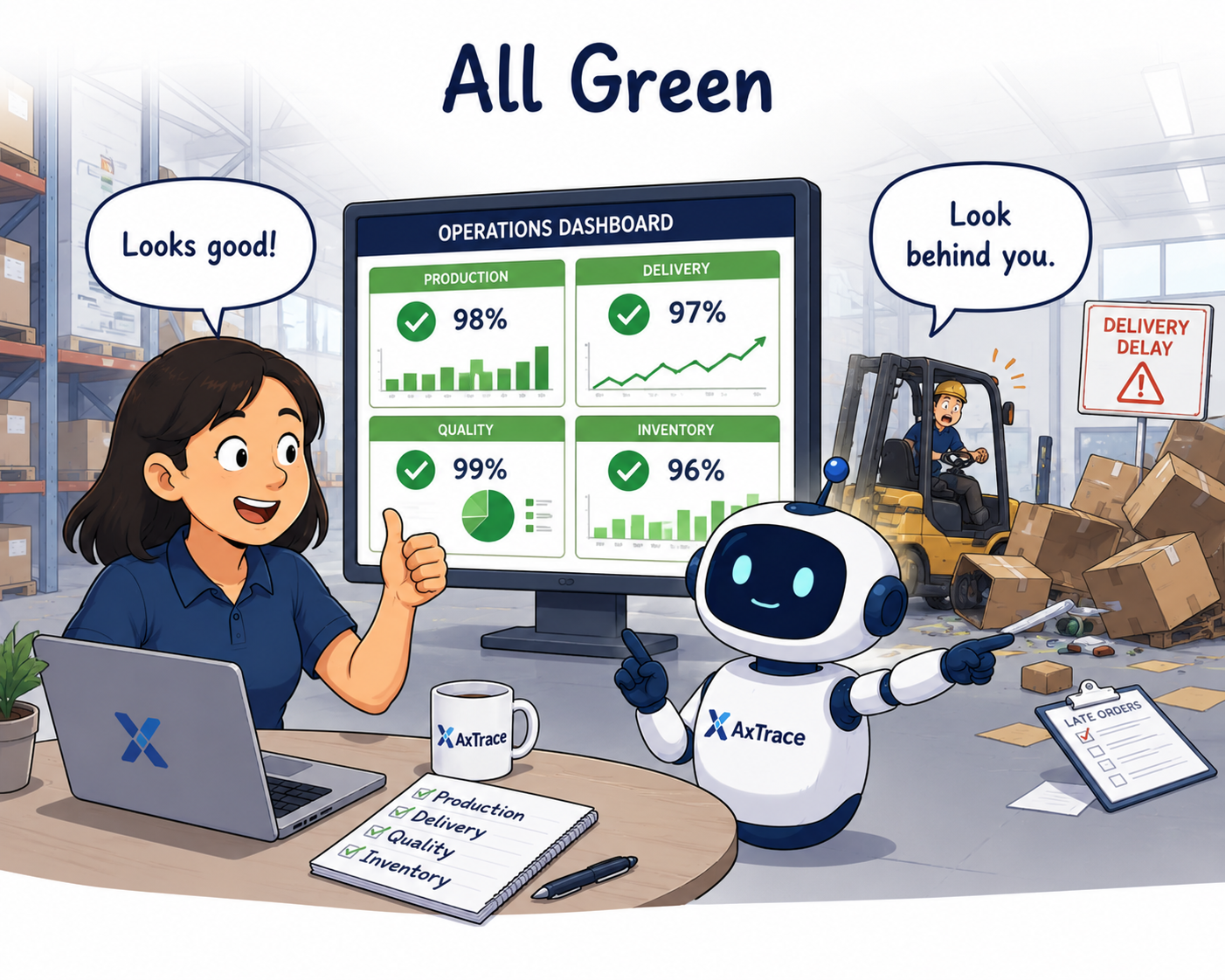
The Dashboard Says Green
Everything on the dashboard is green. Operations still has a problem. Both can be true.
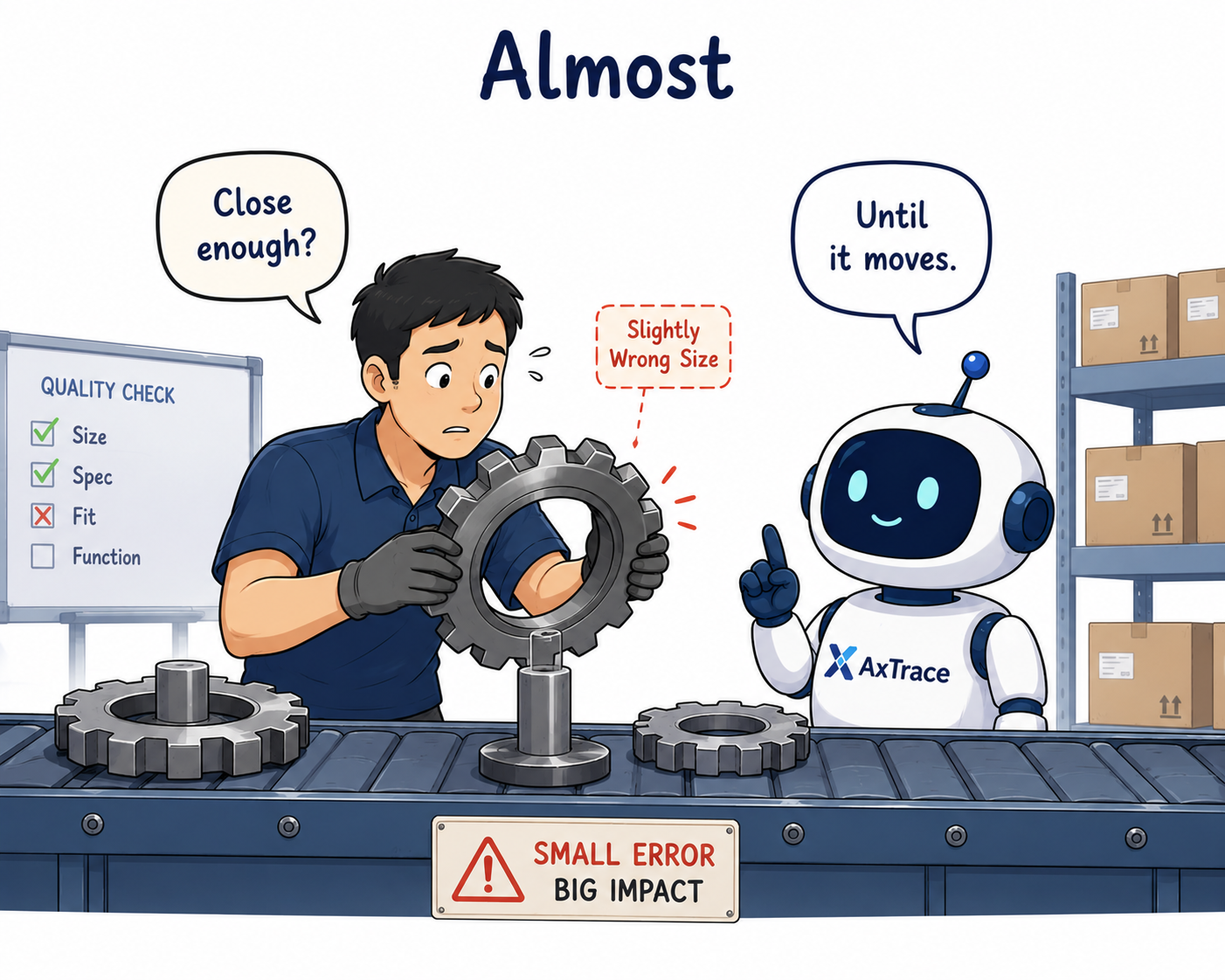
Almost Right Is Still Wrong
The most dangerous operational data isn't always obviously wrong. Sometimes it looks just accurate enough to trust.

Design for Reality
Exceptions aren't just problems to clear. Repeated exceptions are evidence that your operation is trying to tell you something.
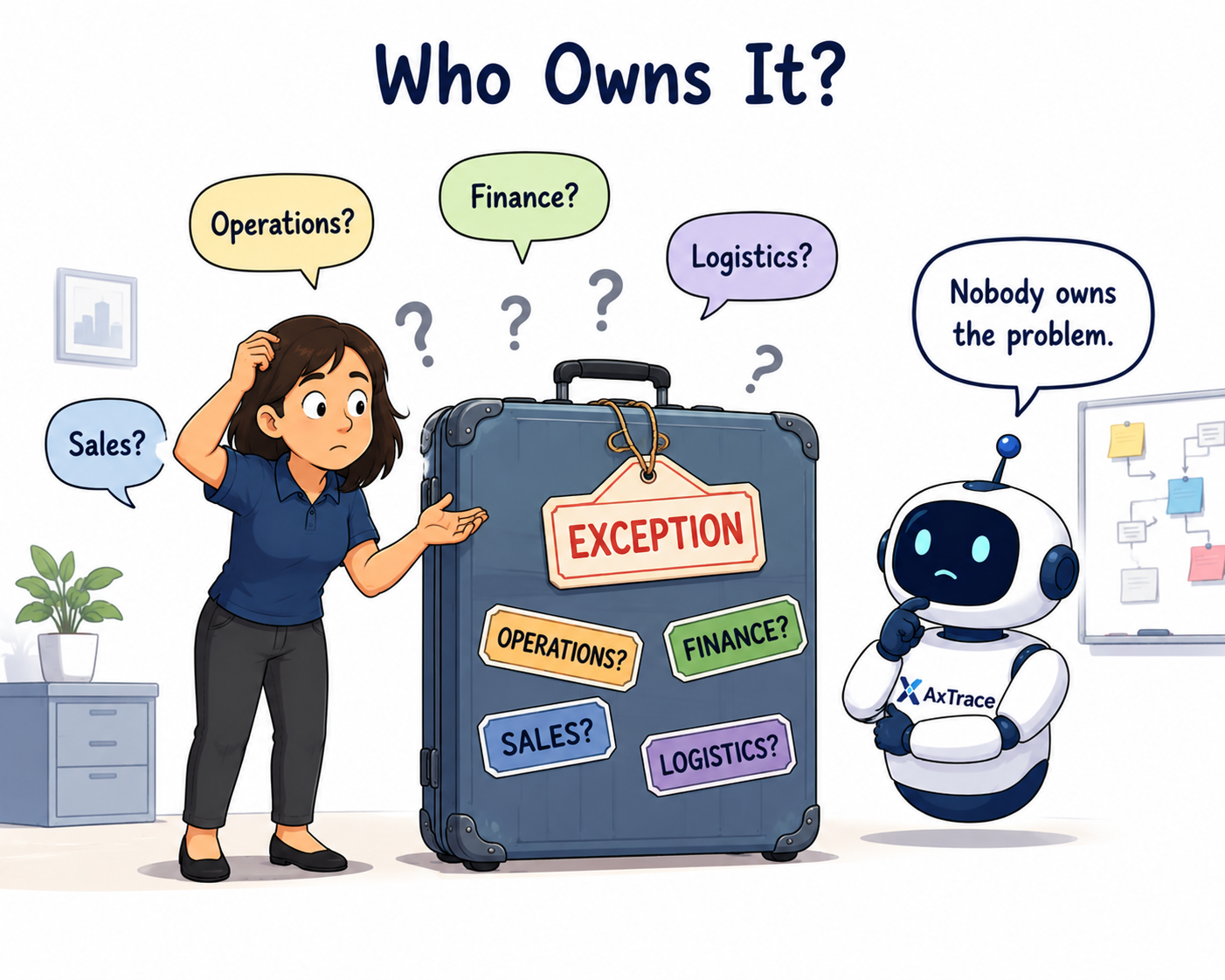
Exceptions Need Owners
Some problems aren't difficult to solve. They're difficult because nobody knows who owns them.
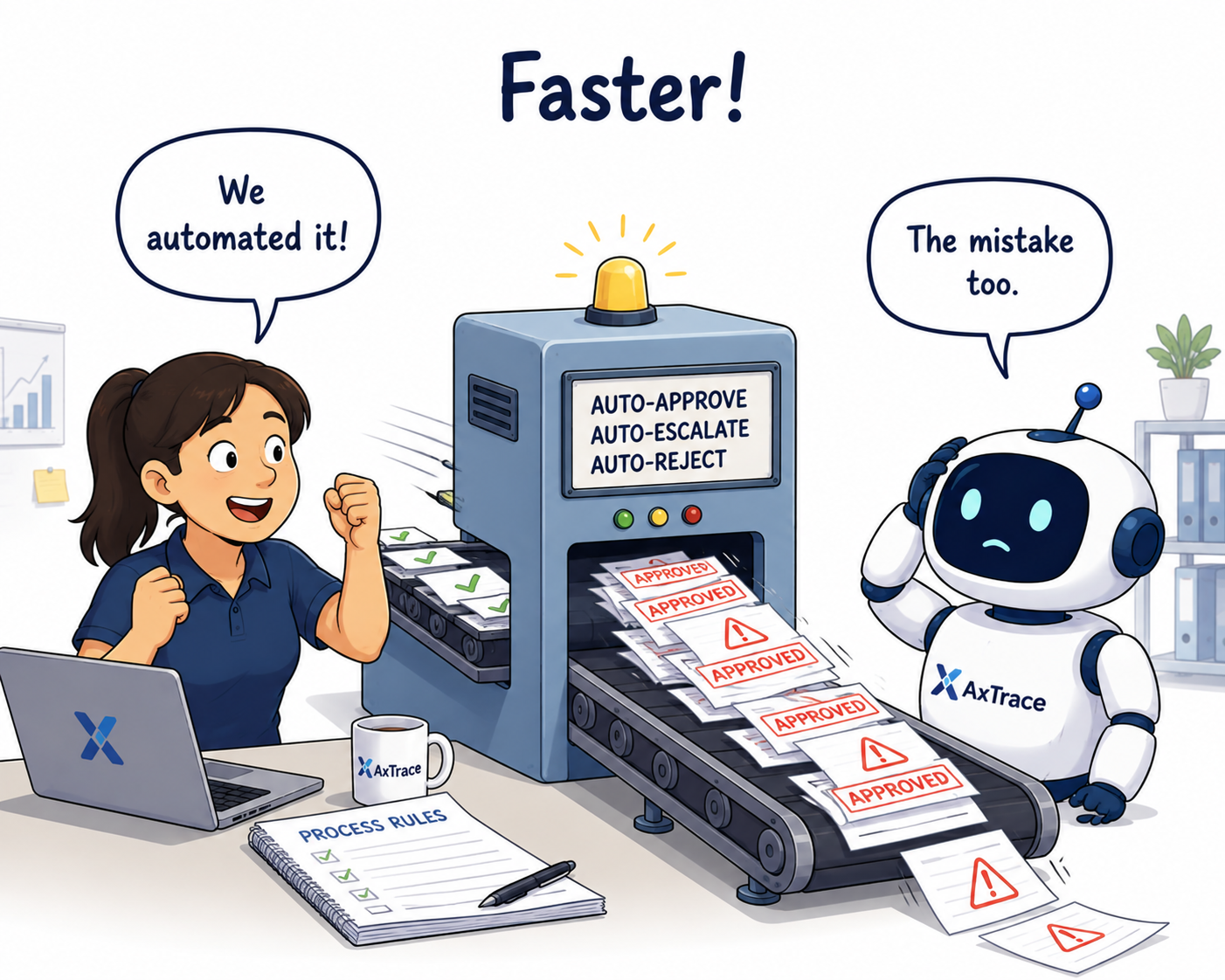
Automation Loves Bad Rules Too
Automation doesn't know whether your process is sensible. It simply becomes extremely efficient at following it.
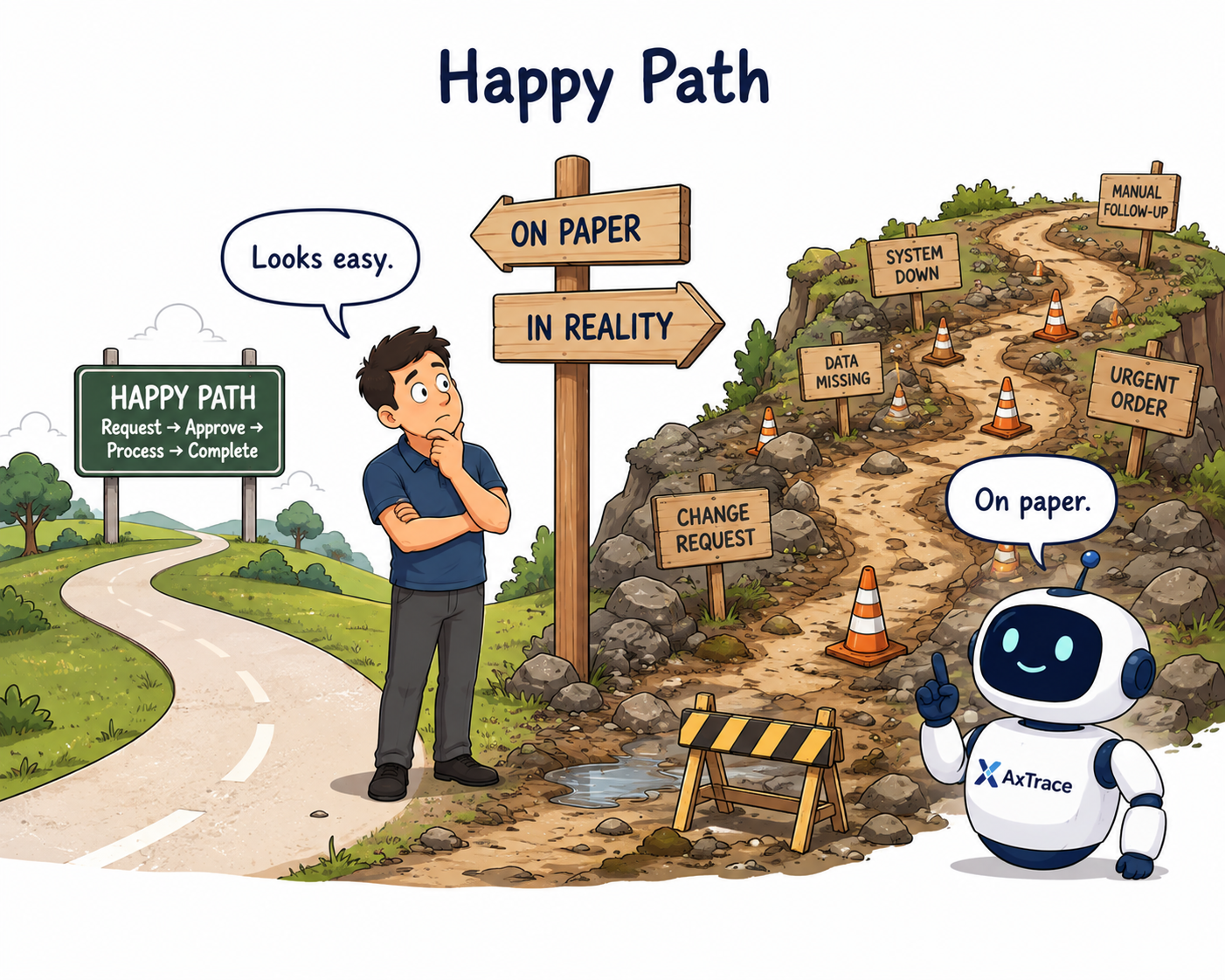
The Happy Path Is a Myth
Your workflow diagram may have four neat boxes. Real operations usually have another twenty hiding behind them.

Your Best People Are the Workaround
Some employees aren't just doing their jobs. They're quietly holding the entire process together.
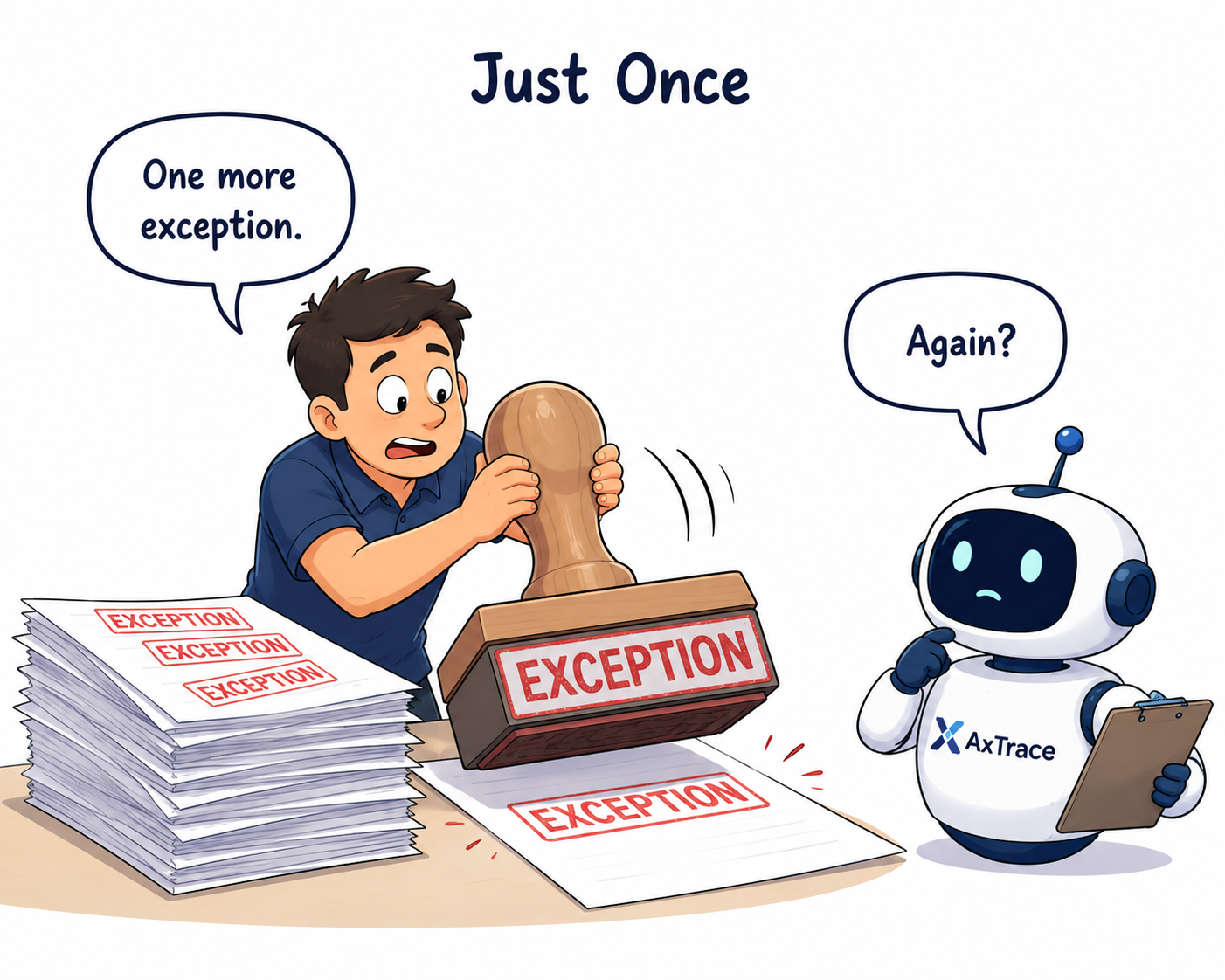
Just This Once
“Just this once” sounds harmless. Repeat it often enough and you have created a new process without realising it.
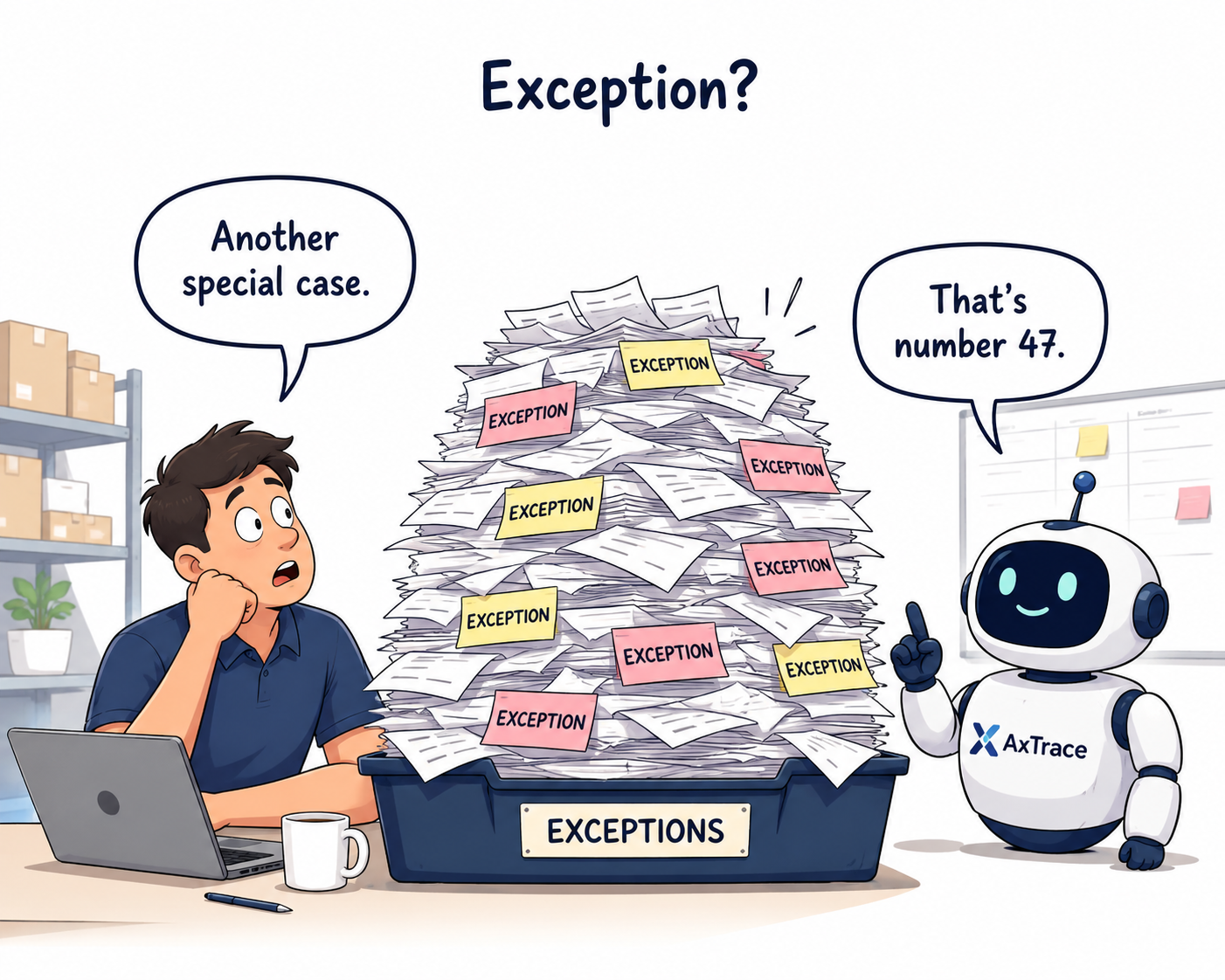
The Exception Became the Process
Exceptions are normal. But when half the operation depends on them, they are no longer exceptions.
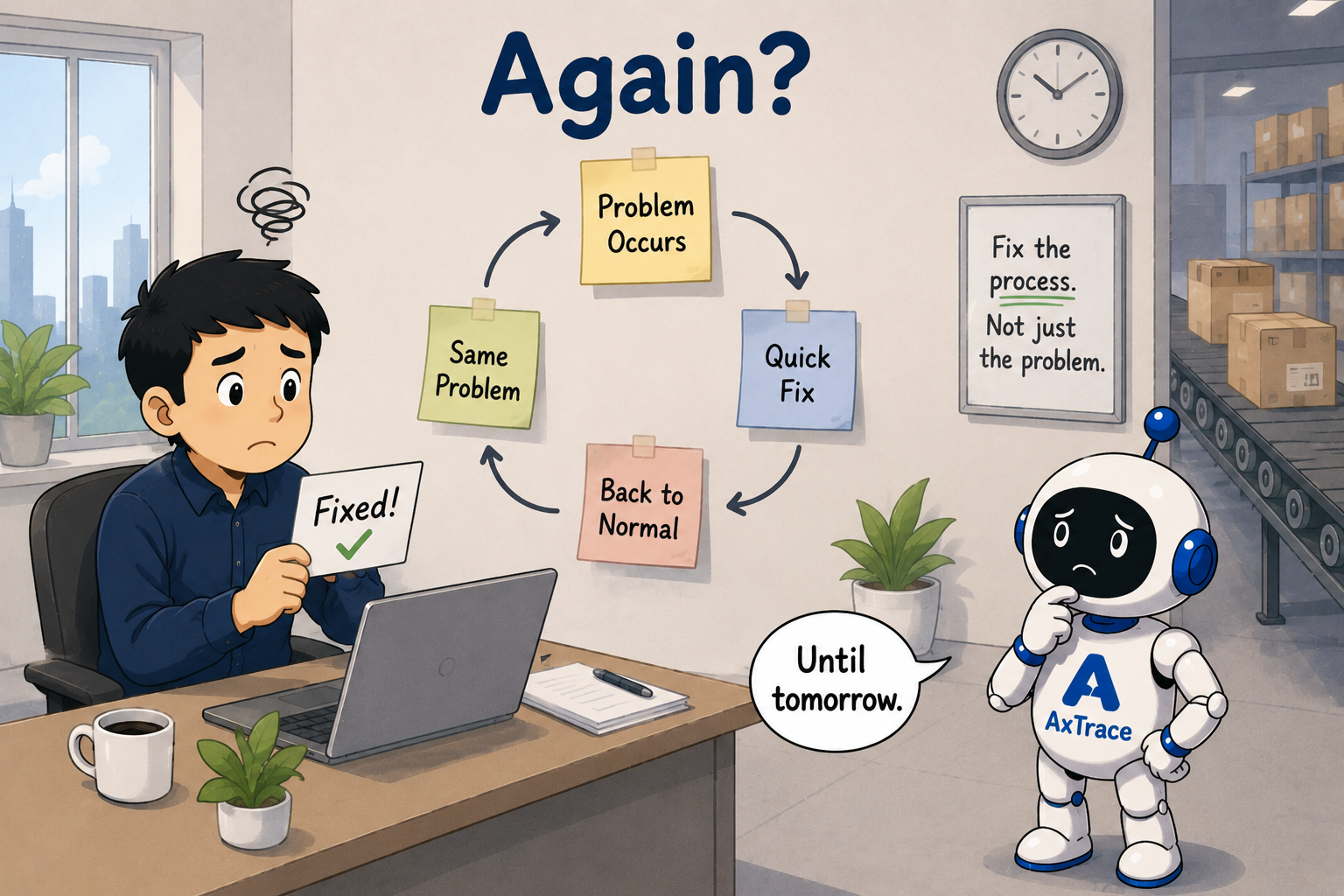
Fix the Process, Not Just the Problem
If your team keeps fixing the same problem, the problem isn't really fixed. Trace the cause, improve the process, and reduce recurring firefighting.
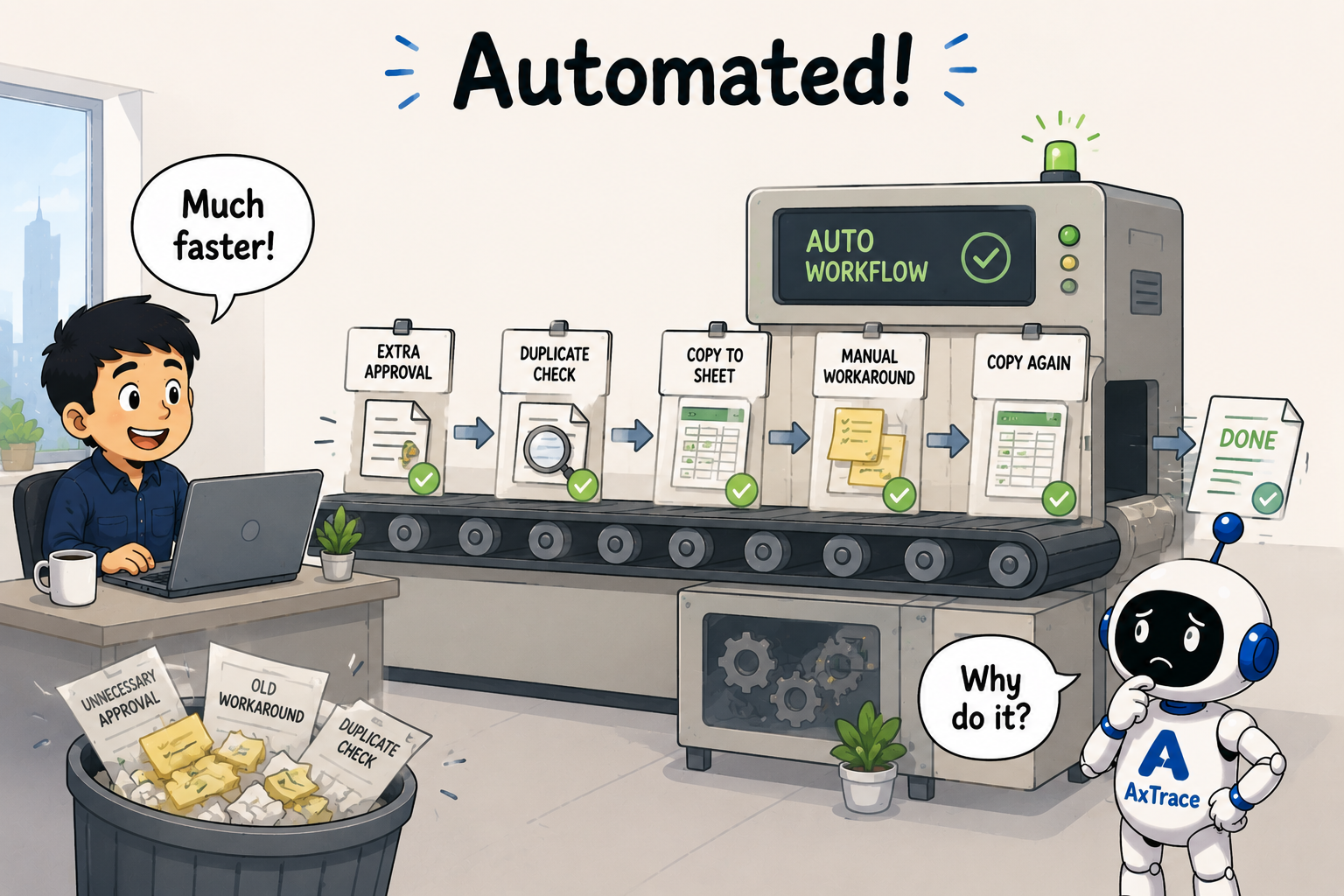
Don’t Automate the Workaround
Automation doesn't fix a bad process. Sometimes it simply makes the workaround faster. Simplify first, then automate what actually matters.
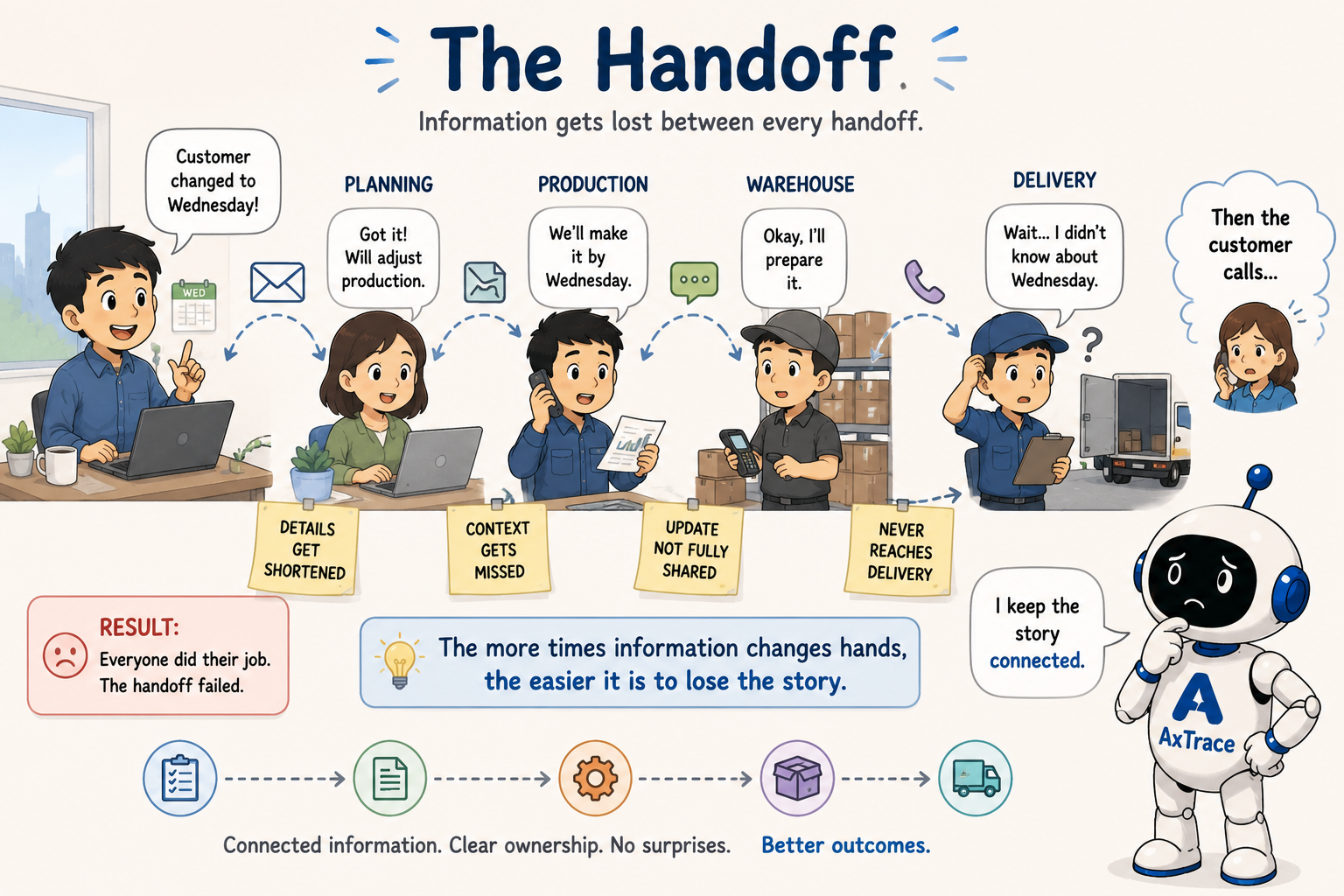
Manual Handoffs Are Where Information Disappears
Everyone did their job, but the process still failed. Discover why manual handoffs are one of the most common places operational information disappears.
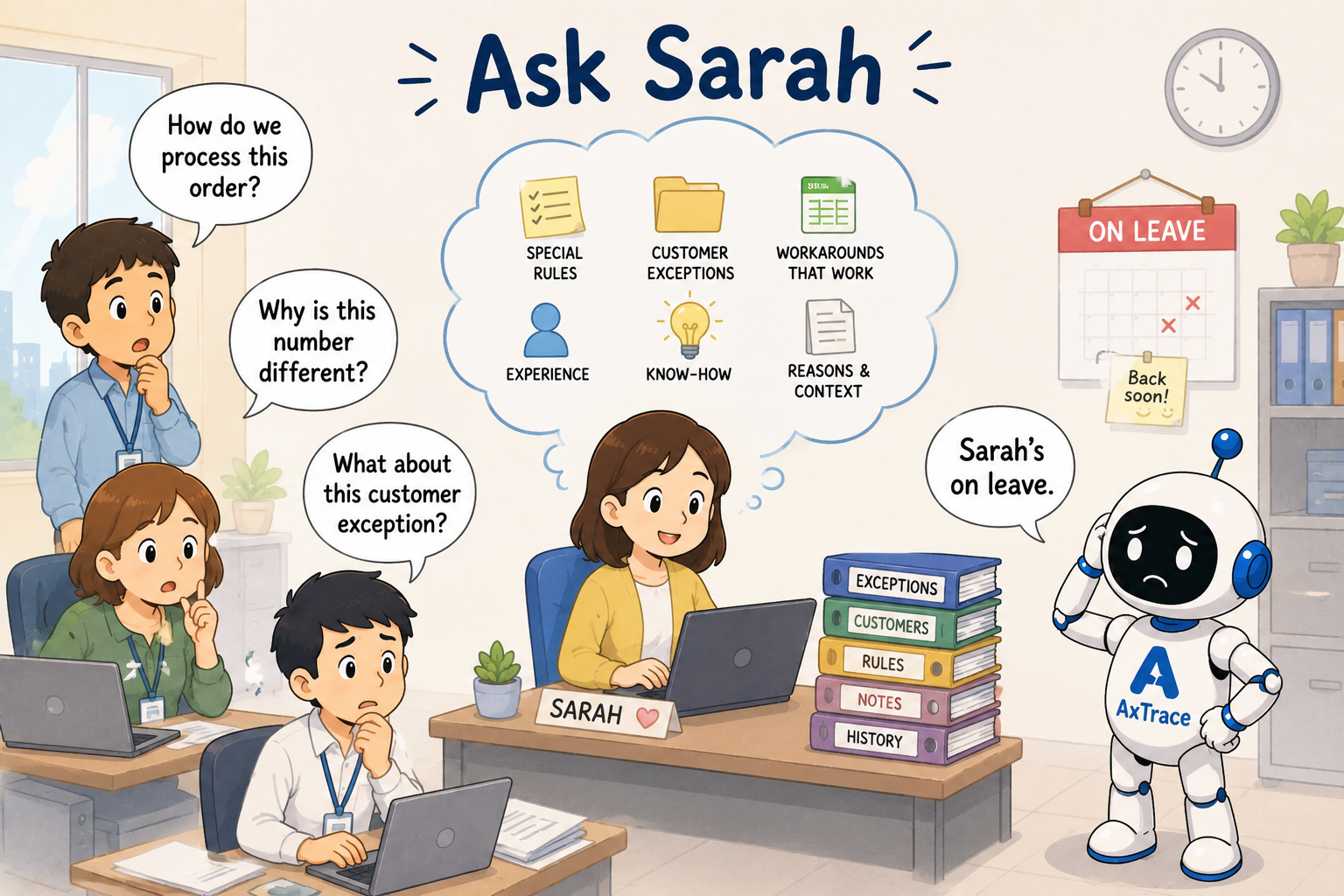
When Only One Person Knows How It Works
“Ask Sarah” works until Sarah isn't there. Discover why undocumented operational knowledge creates hidden business risk.
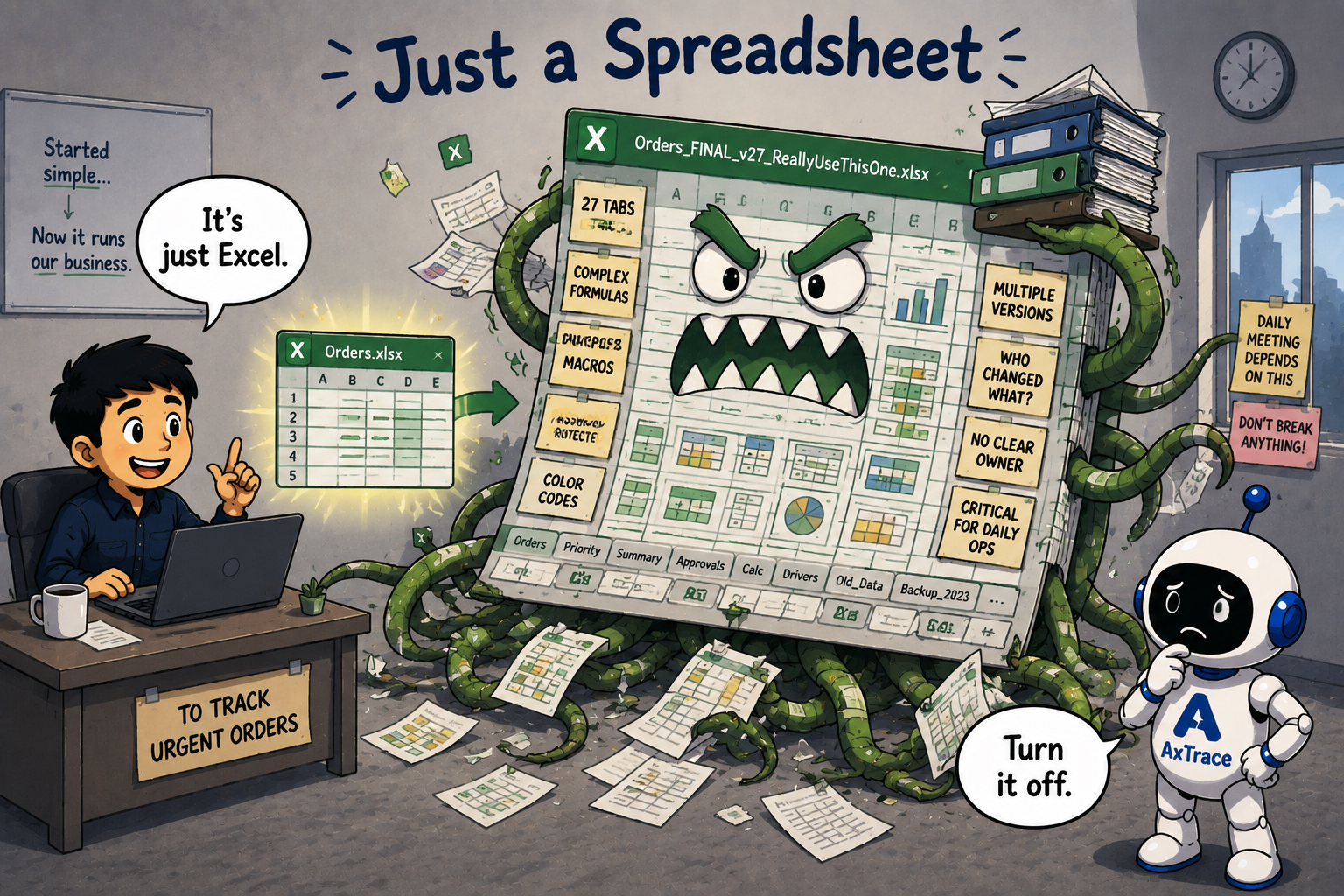
Spreadsheets Become Systems Without Anyone Noticing
It started with five columns. Years later, the business cannot operate without it. Learn how spreadsheets quietly become critical operational systems.
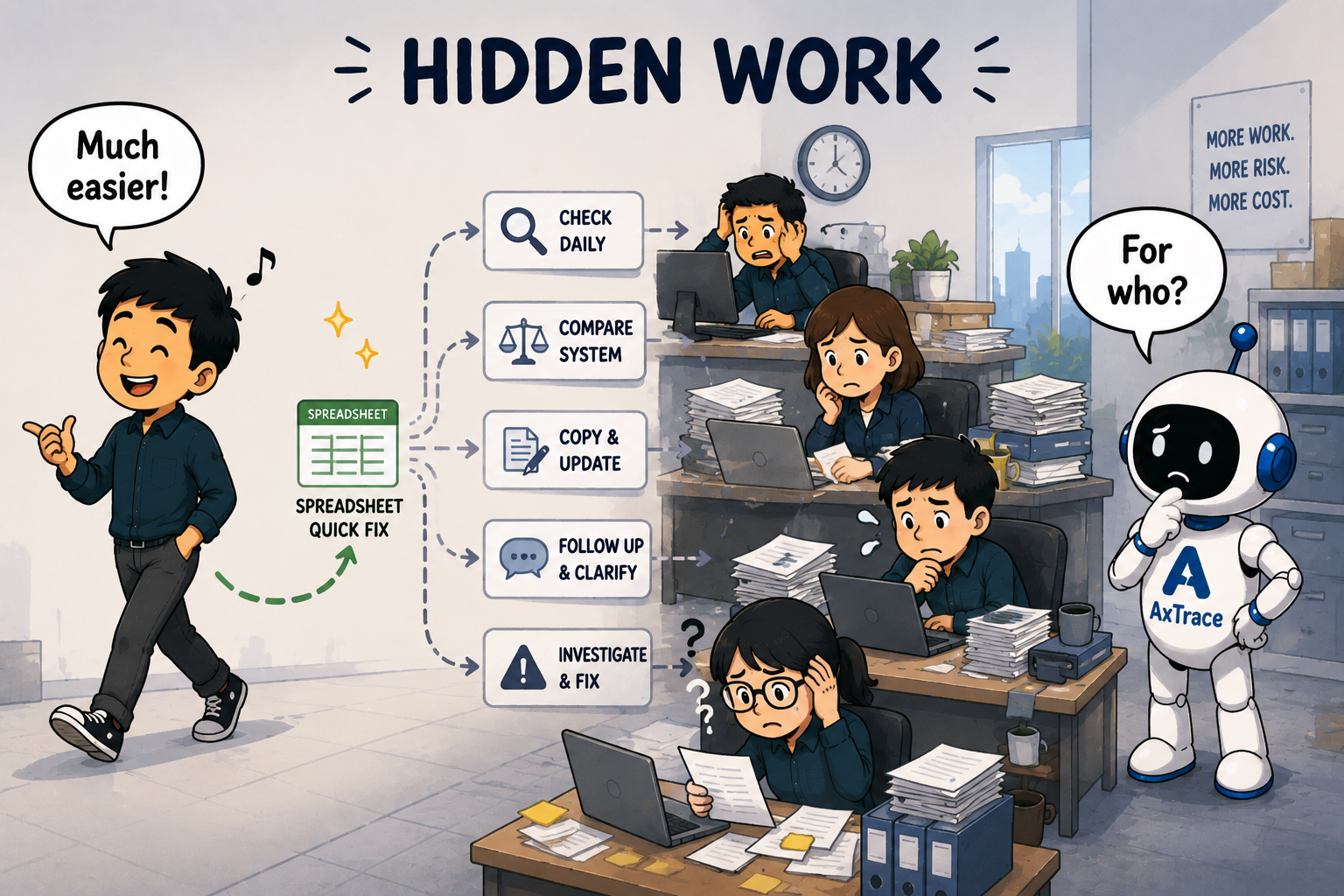
Every Workaround Creates Hidden Work
A shortcut for one employee can create checking, copying, and reconciliation for everyone else. Discover the hidden cost of operational workarounds.
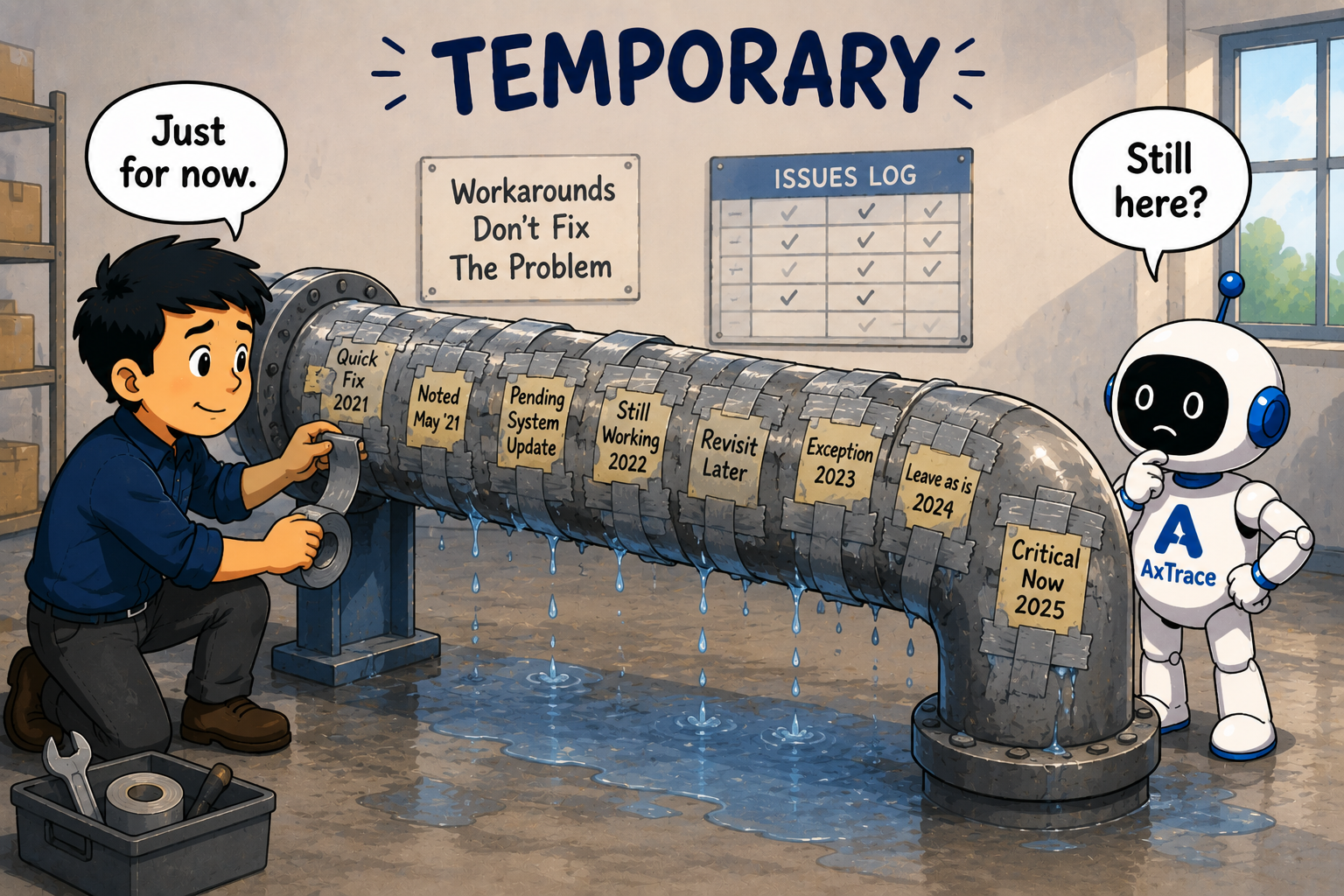
The Temporary Fix That Became Permanent
A spreadsheet created “just for now” can become mission-critical years later. Discover why temporary workarounds create hidden operational risk.
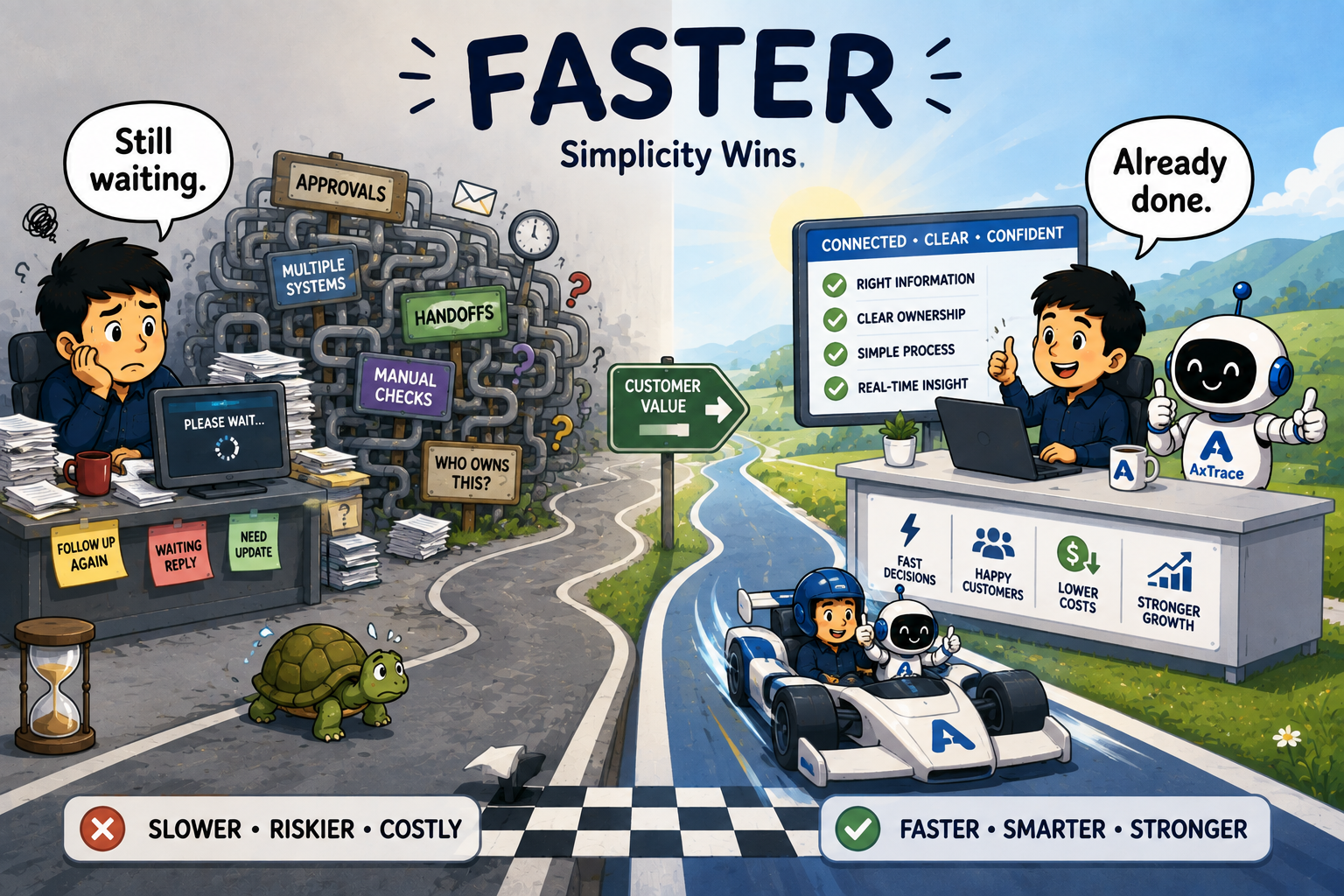
Simplicity Is a Competitive Advantage
The fastest organizations aren't always the biggest. They're often the simplest. Learn why simplicity is a lasting competitive advantage.
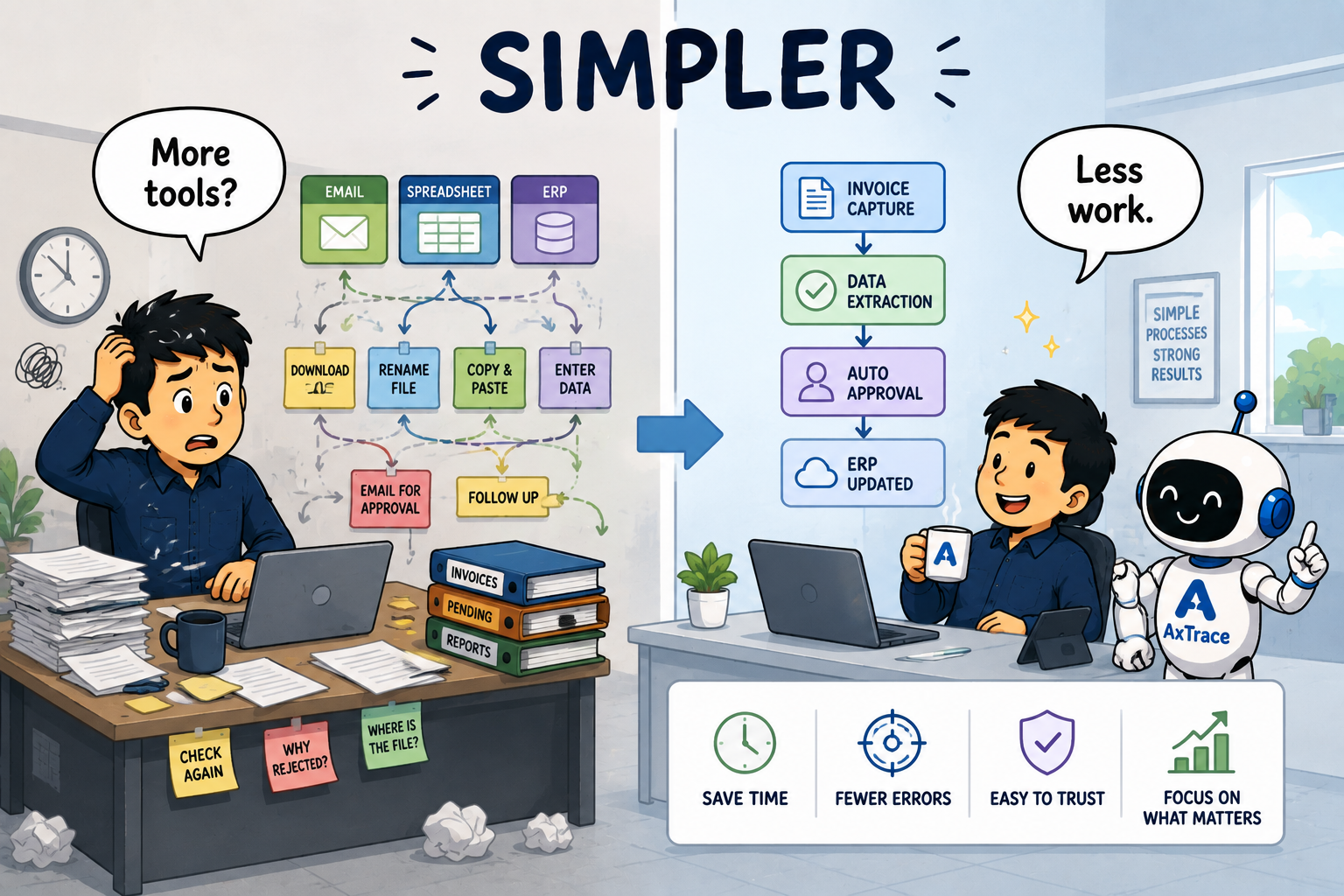
Automation Should Remove Complexity, Not Add It
Technology alone doesn't improve operations. Great automation removes unnecessary work, simplifies processes, and helps people focus on better decisions.